
From the Editor
Introducing WHAT’S WORKING
In a special event at The Malin in Austin, and on The New Consumer, we’ll explore what’s working in creative businesses today — and how the best are getting it done.
 By Dan Frommer on Thursday, October 31, 2024 at 8:00 am

I’m excited to announce a new partnership with The Malin, a hospitality-led workspace with locations in New York City, Nashville, and now Austin.
Our collaboration is called WHAT’S WORKING, and it’s all about highlighting what’s working in creative businesses today, and — also — what is “working” these days? We’ll explore both.
We’re kicking off this project with a special evening event at The Malin’s new location in East Austin on Wednesday, Nov. 13. (Pictured above.) I’ll lead a conversation with two of Austin’s most creative entrepreneurs: Kin Euphorics founder Jen Batchelor and Made In co-founder Chip Malt. Then we’ll open up the space for a housewarming party.
As a reader of The New Consumer, you’re invited! Please join us by RSVPing to TheMalinEastAustin@giantnoise.com — I’m looking forward to seeing you there. (If you’d like to attend the panel in addition to the party, please specify, and mention my name or The New Consumer.) And if you have Austin friends who should join us for the party, please feel free to send them the link to this article, too, to sign up.
If you can’t make it to Austin, I’ll be highlighting our conversations over the coming weeks on The New Consumer as part of a new WHAT’S WORKING series in the newsletter.

I love this concept — and our double entendre — for two reasons.
First, because we don’t talk enough about “what’s working” in business these days.
Launches and big hires (and embarrassing disasters) often get a lot of coverage, but the simple stories of success are usually more interesting — and almost always more instructive. On the introductory text for The New Consumer, “highlighting what’s working” has been one of my primary missions since day one, and I’m excited to devote more space to it.
And second, because the very nature of work has evolved profoundly over the past 5 years, as the pandemic remixed and accelerated all kinds of shifts in where, how, how much, and for whom we want to work.
The proof is in the data. Life outside of work has blossomed into a new normal, while work itself has changed for good.
Americans are traveling at all-time record levels, for instance: We set a new record on July 7, when more than 3 million travelers passed through a TSA checkpoint. (We may set another record over Thanksgiving.) Meanwhile, in New York City, Subway ridership has returned to around 75% of pre-pandemic levels.
Yet corporate office occupancy remains much lower: Just over 50% in New York, on average, according to Kastle, a company that manages office security and employee badge control. It’s actually higher in Austin — around 62% these days — and still even lower in San Francisco, just over 40%. (Austin, meanwhile, also ranked as the city with the highest percentage of remote workers, in a recent New York Times analysis.) But occupancy is still hovering around 51% in Kastle’s 10-city average — about the same as a year ago.
Americans who have more flexibility in where they work also say they’re happier, more satisfied, and more motivated at work.
Late last year, we asked more than 3,000 US consumers a handful of survey questions about work, part of the Consumer Trends research that I publish with Coefficient Capital.
First, we asked people how much flexibility they had in their work location. Among those who work, more than half said they have “a lot of flexibility” or “medium flexibility” in where they work. This was even higher among younger Americans in the Gen. Z and Millennial generations (who were 15 to 42 years old at the time of our survey).
Then, we asked our panel to rate their happiness with work, across four different criteria: How satisfied they feel at work, how fulfilled they feel at work, how happy they feel with their current work, and how motivated they feel at work.
Workers with “medium” or “a lot of” flexibility in their work location rated significantly higher across all four questions than those with “limited” or “no” flexibility. Those with “a lot of flexibility” rated the highest in each.
Working from home, of course, is a big part of that. But working from someplace else — not your company’s office, not your kitchen table — also feels like an important and compelling trend. And that’s where my partner in this project, The Malin, fits into the picture.
The Malin launched in 2021 in SoHo, Manhattan, as a workspace with high-touch services. The big idea, founder Ciarán McGuigan explains, was a bit of a reaction to the “glass-box, cookie-cutter” office design that had emerged during the 1990s and 2000s.
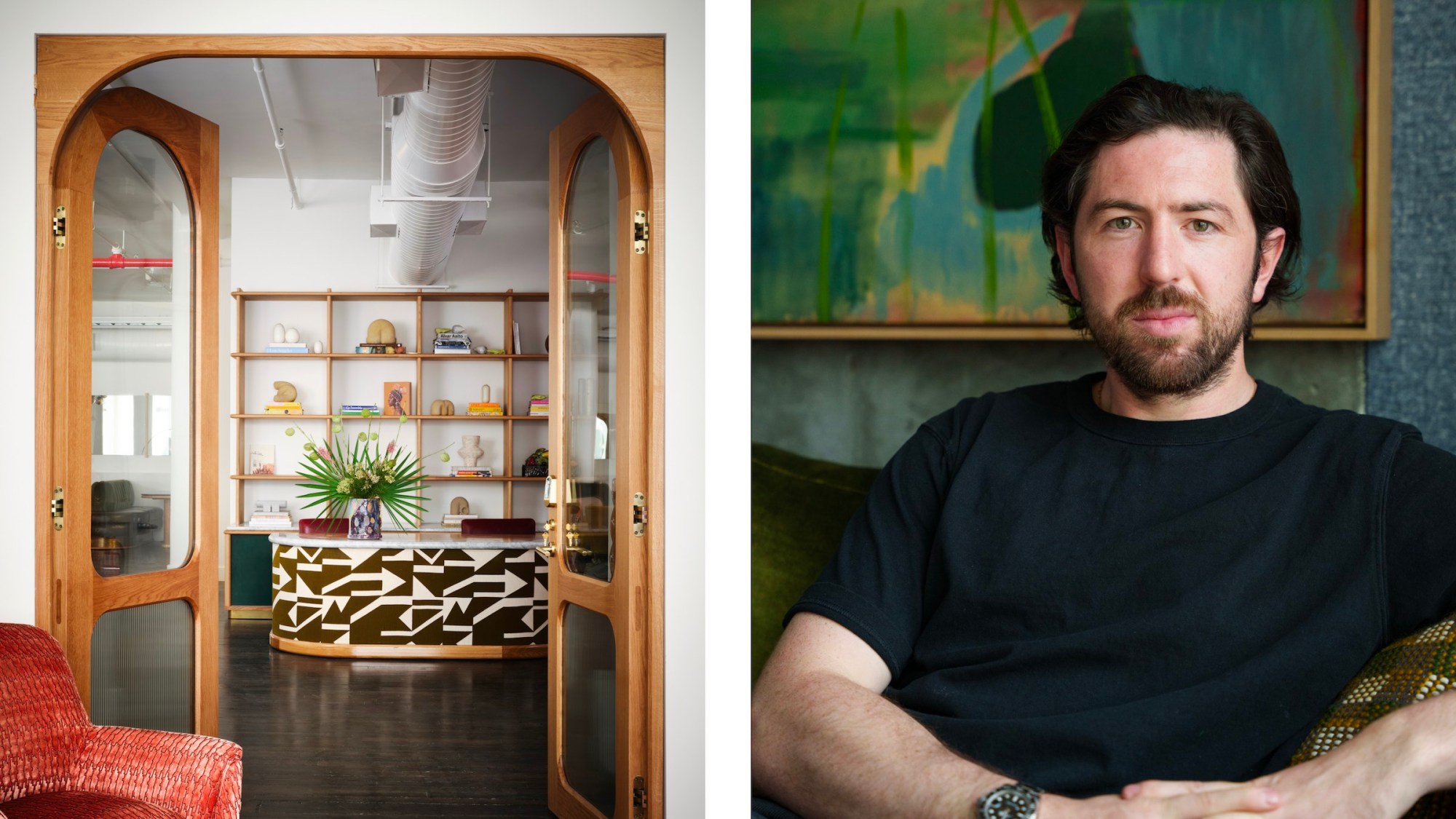
McGuigan, who had been leading his family’s design company, Orior, brought an entrepreneur’s mindset — and an elevated aesthetic — to creating an environment for a post-pandemic workforce that prioritized hospitality and service, functionality, convenience, and beautiful design.
The central question: “If we strip it all back and just provide a really great space, just focus on work,” he poses, with a “really beautiful product, with really great people there to service you, from the moment you step in to the moment that you leave… What does that look like?”
It looks more like a boutique hotel lobby than a lame office building — ultimately, it’s a place where you can be comfortable and inspired to do your best work.
The company has grown since, partnering with building owners and developers to operate more floors, cities, and locations — including its newest NYC location on Park Avenue South in Manhattan’s NoMad neighborhood, which opens this week.

The Malin is — from my POV, and why I’m excited to partner with them — the type of place you’d actually want to work, where they get both the big picture and the detail right.
Its locations are small and intimate, bright and colorful, with a strong design opinion, high-end furniture that’s both fun and functional, solid oak, and friendly hospitality. Instead of beer kegs and faux rah-rah community, the vibe is elegant and professional.
Members can access complimentary executive assistant and concierge services, as well as locally roasted coffee. The playlist is aligned to the time of day and doesn’t repeat. There’s a pleasant scent program — Cinnamon Projects incense burned throughout the workday.
I’m writing this from the Bedford Library quiet room in The Malin’s Brooklyn location, with a stunning view of Williamsburg and points beyond. It’s my second time here — the concierge team has made me feel right at home, and has probably already memorized my coffee order! (An iced cortado, unless it’s snowing outside.) One of these on the eastside of Los Angeles, please!

Creative professionals and freelancers work here, but also tech startups and venture capital firms — The Malin is an inclusive club that doesn’t vet or curate its members. Companies can also rent boardrooms and spaces by the hour or the day for offsites or team meetings.
“I suppose what bonds everyone together is that they just want to be working in a really effective, functional, and nicely designed environment,” McGuigan says.
I’m looking forward to helping The Malin launch its East Austin location and sharing more stories about WHAT’S WORKING in future newsletters. Please join us the evening of Nov. 13 if you’re in town — RSVP to TheMalinEastAustin@giantnoise.com if you’d like to attend, and please mention The New Consumer and specify whether you’d like to attend the panel.