
Executive Briefing
David Protein and the new retail roadmap
Does Whole Foods matter when you have TikTok and Huberman?
 By Dan Frommer on Friday, February 14, 2025 at 8:00 am
Hello hello! It’s Dan Frommer, back with The New Consumer. How are you?
Let’s do some members Office Hours! I’ve just added some slots to the calendar for next Thursday, February 20. As always, these 20-minute Zoom sessions are off-the-record by default, and the time is yours — I’m here for advice, ideas, feedback, a quick pitch, whatever is most useful. Become a member and refresh this page for the booking link, but hurry — space is limited (though I’ll be doing these ~quarterly). I look forward to speaking!
Today: Notes on the David Protein bar retail rollout. But first, What’s Working, in partnership with The Malin.

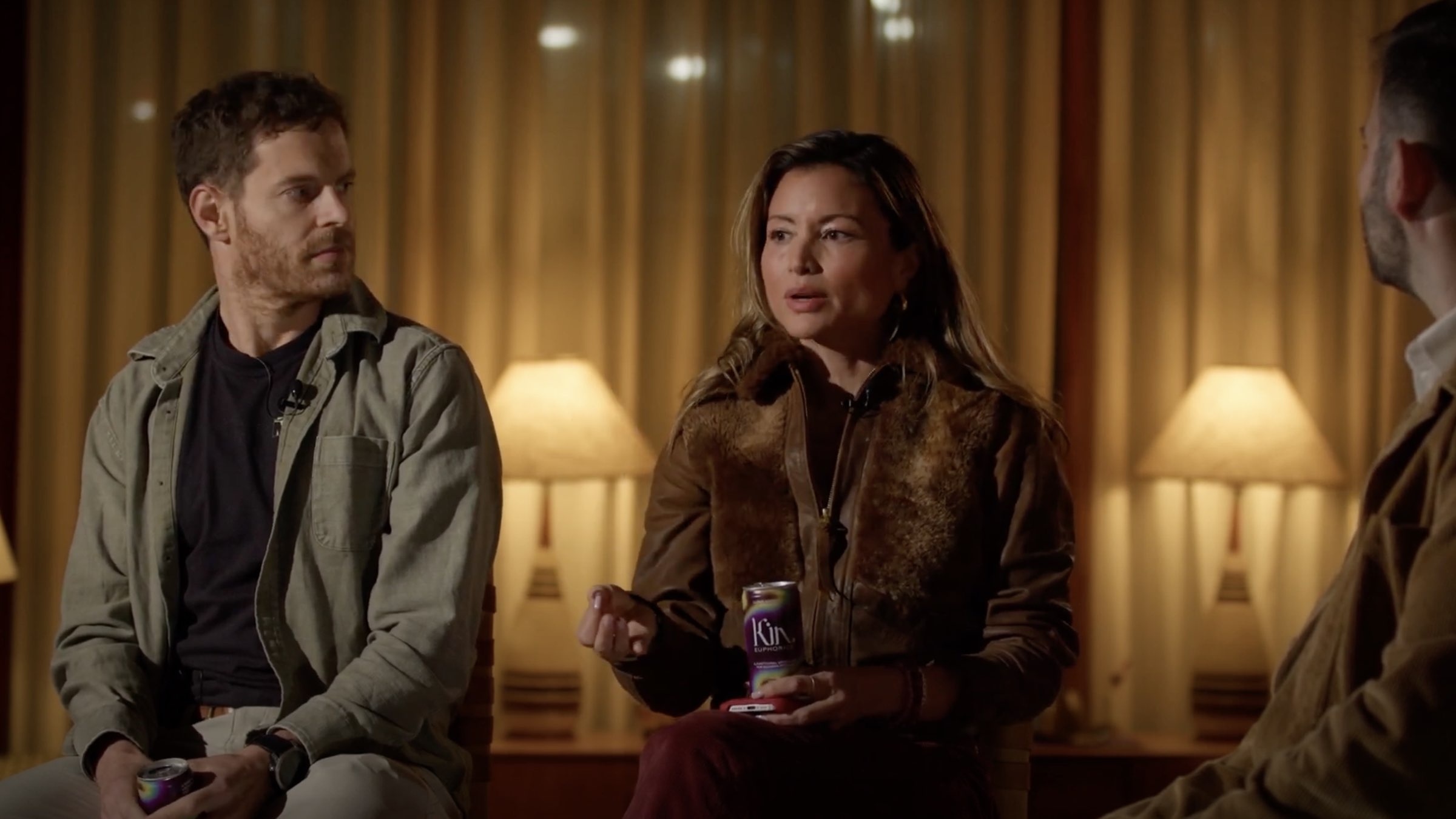
Global Flavor Explosion — The tasting notes for one of Kin Euphorics’ latest non-alcoholic beverages — the Luna Morada, a “sweet-smoky twist” on a Peruvian drink called the Chicha, featuring pineapple, tamarind, Persian lime, and chili — have some data behind them.
That drink was created in collaboration with Sprouts, the natural grocery chain, Kin founder and CEO Jen Batchelor told the crowd at our What’s Working event at The Malin in East Austin.
“They were like, ‘Hey, we love what you’re doing. You guys are crushing it in the category. How about you take a deep dive into this data project that we’ve been doing’.”
What that identified, Batchelor said, was that regardless of the aisle in the grocery store — “spices, cereals, whatever… the fastest growing categories for them are Latino- and Asian-inspired foods.”
That tracks: American consumers are much more aware of Latin and Asian flavors than they were a decade or two ago, thanks to everything from food television and Instagram to international travel and multi-ethnic households. Searches on Instacart for “yuzu,” for example — the Asian citrus — grew more than 1,000% in 2023, according to our Consumer Trends research.
During that time, many premium Latin- and Asian-inspired food brands have grown rapidly, from Momofuku and Bachan’s to Siete Foods, which PepsiCo is buying for $1.2 billion. (Siete, which sells “grain-free” tortillas and chips, plus beans, Mexican spices, etc., was reportedly on track to do $500 million in sales last year, up from $150 million in 2020.)
“Sprouts is doubling down on those investments because they’re seeing how quickly that’s that’s growing,” Batchelor said. “And so they asked us to put together one that was inspired by that trend. And it’s working.”
(Another new drink from Kin, the Matchatini — featuring organic matcha tea — fits this one, too.)
What’s Working is a partnership with The Malin, a hospitality-led workspace with locations in New York City, Nashville, and now Austin. Stay tuned for more highlights and takeaways from our event, or enjoy our whole conversation on YouTube.
Btw, if you’re looking for a workspace designed to inspire, The Malin recently announced its next NYC location is coming this year to the Flatiron, a short walk from its beautiful new NoMad space. Get updates here. I’ll see you there.
Try to find a consumer startup with as much brand heat — and as high expectations — as David Protein, the protein bar company from Peter Rahal, the former co-founder and CEO of RxBar.
Some of this hype is self-induced: “Humans aren’t perfect, but David is,” the homepage says. (The point of David bars is that they have a lot of protein — it claims the highest density of calories from protein on the market — and very little sugar.)
But this is also what happens when you sell your last company for $600 million and then start a new, theoretically better one in the same category, featuring wellness-influencer seed investors like Dr. Andrew Huberman and gold foil wrapping.
I’ve been particularly fascinated with David’s rollout into grocery and other retail stores since its launch online last fall.
I was reminded of this a few weeks ago in New York, when I encountered this giant pile of David bars in the front of Westside Market, a local grocery chain with seven locations, in the East Village. This felt random and a little chaotic — the opposite of many big-budget CPG rollouts.
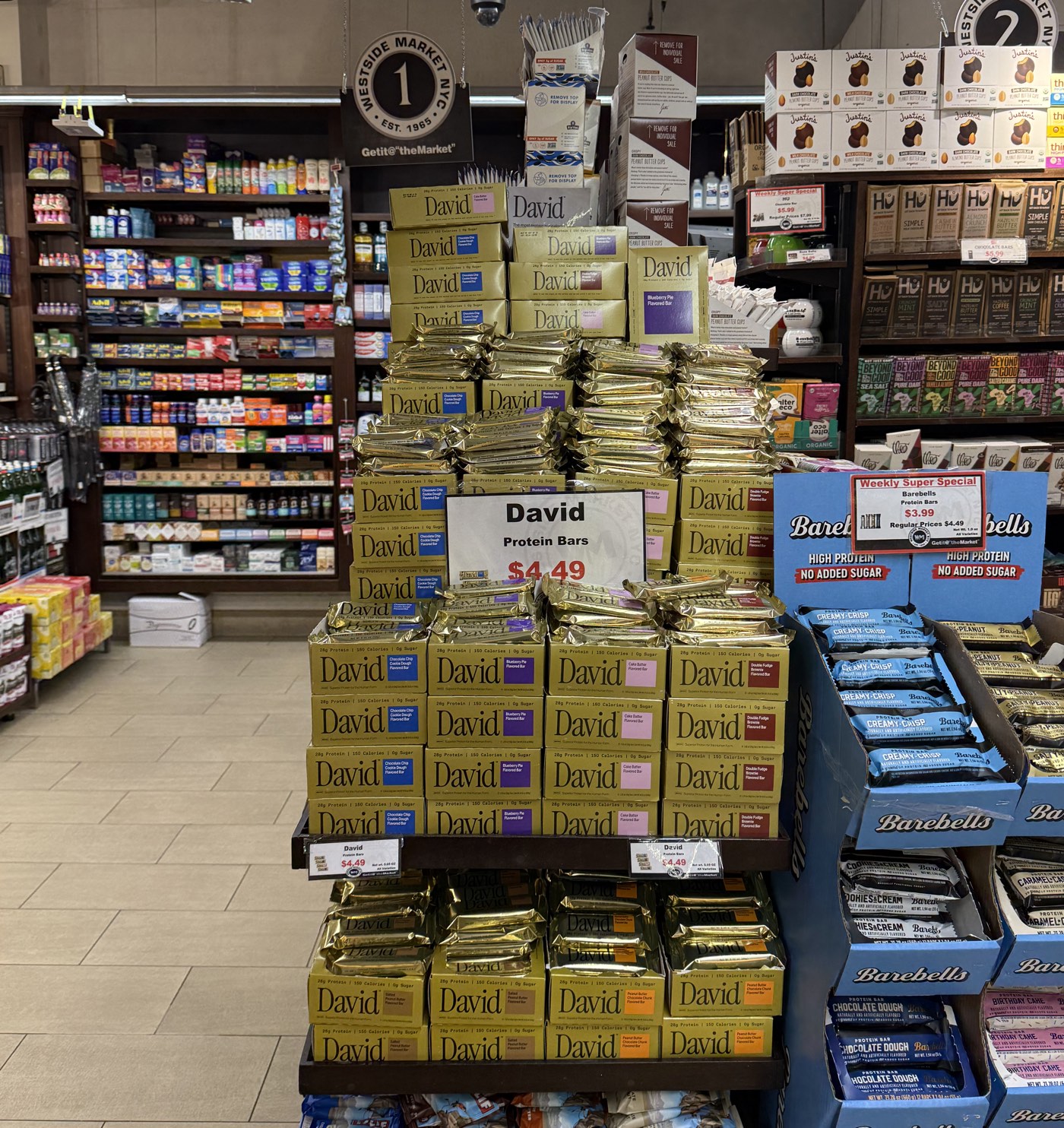
Instead of debuting exclusively at Whole Foods — which used to be the dream launch partner and seal of approval for any high-end food brand — David is sold at the Vitamin Shoppe, and at Foxtrot, the convenience store startup in Chicago and Dallas, and at a bunch of smaller, indie shops like Westside Market.
The New Consumer Executive Briefing is exclusive to members — join now to unlock this 2,200-word post and the entire archive. Subscribers should sign in here to continue reading.
Hi, I’m Dan Frommer and this is The New Consumer, a publication about how and why people spend their time and money.
I’m a longtime tech and business journalist, and I’m excited to focus my attention on how technology continues to profoundly change how things are created, experienced, bought, and sold. The New Consumer is supported by your membership — join now to receive my reporting, analysis, and commentary directly in your inbox, via my member-exclusive newsletter. Thanks in advance.