
Executive Briefing
The sketchy side of crowdfunding
Companies like Levels are asking consumers to invest — with a lot less information than VCs would demand.
 By Dan Frommer on Monday, April 8, 2024 at 8:00 am
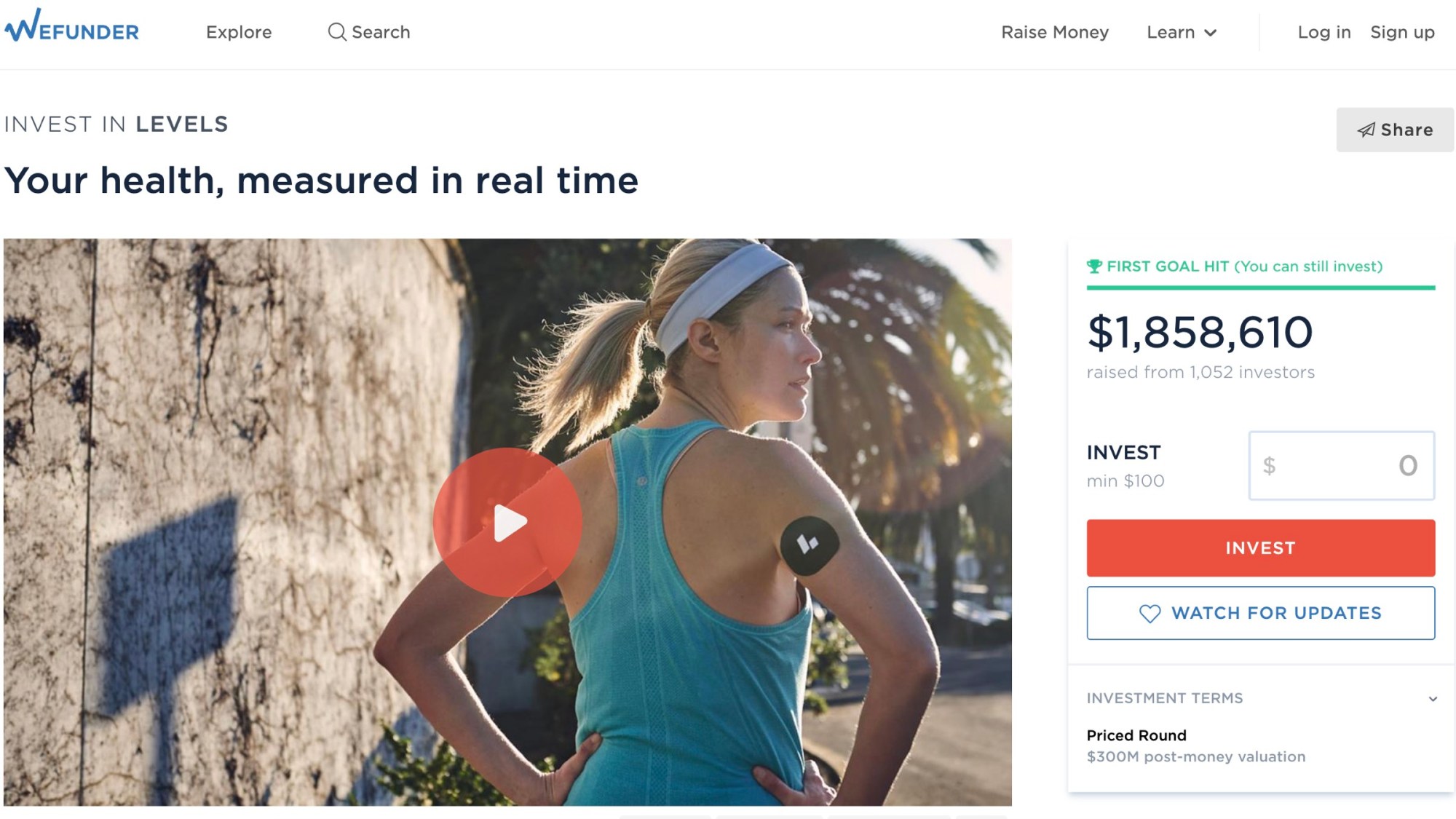
Levels, a startup that’s trying to consumerize blood-sugar tracking — and reverse the US metabolic health crisis — through software and sensors, is raising new funds at a $300 million valuation.
Usually, for a company at that stage, that means selling shares to venture capital firms. And Levels, which has raised almost $90 million over the past five years, according to Pitchbook, is no stranger to them: Top funds like Andreessen Horowitz and Founder Collective are already investors.
But in this case, Levels is asking consumers to invest in an extension of its Series A round, via the equity crowdfunding platform Wefunder. After launching its campaign last month, the company is approaching $2 million in commitments from more than 1,000 investors.
It’s a great example of the potential of equity crowdfunding: Offering individual consumers the ability to invest in a high-growth, high-risk, potentially high-reward company when they typically wouldn’t have access.
It’s also a great example of how, in practice, crowdfunding investors are at a real disadvantage: Levels is providing them with far less information about its business than professional investors would demand.
The New Consumer Executive Briefing is exclusive to members — join now to unlock this 2,300-word post and the entire archive. Subscribers should sign in here to continue reading.
Hi, I’m Dan Frommer and this is The New Consumer, a publication about how and why people spend their time and money.
I’m a longtime tech and business journalist, and I’m excited to focus my attention on how technology continues to profoundly change how things are created, experienced, bought, and sold. The New Consumer is supported by your membership — join now to receive my reporting, analysis, and commentary directly in your inbox, via my member-exclusive newsletter. Thanks in advance.