
Executive Briefing
Waymo is the rare case where a product genuinely exceeds expectations
Also: Do all founders need to become Instagram influencers? And who’s cutting back on Chipotle?
 By Dan Frommer on Monday, November 3, 2025 at 8:00 am
When’s the last time a new technology product or experience moved you enough to post about it?
It’s hard to think of many that have reached critical mass over the past decade: Snapchat face filters? Covid vaccines? AirPods?
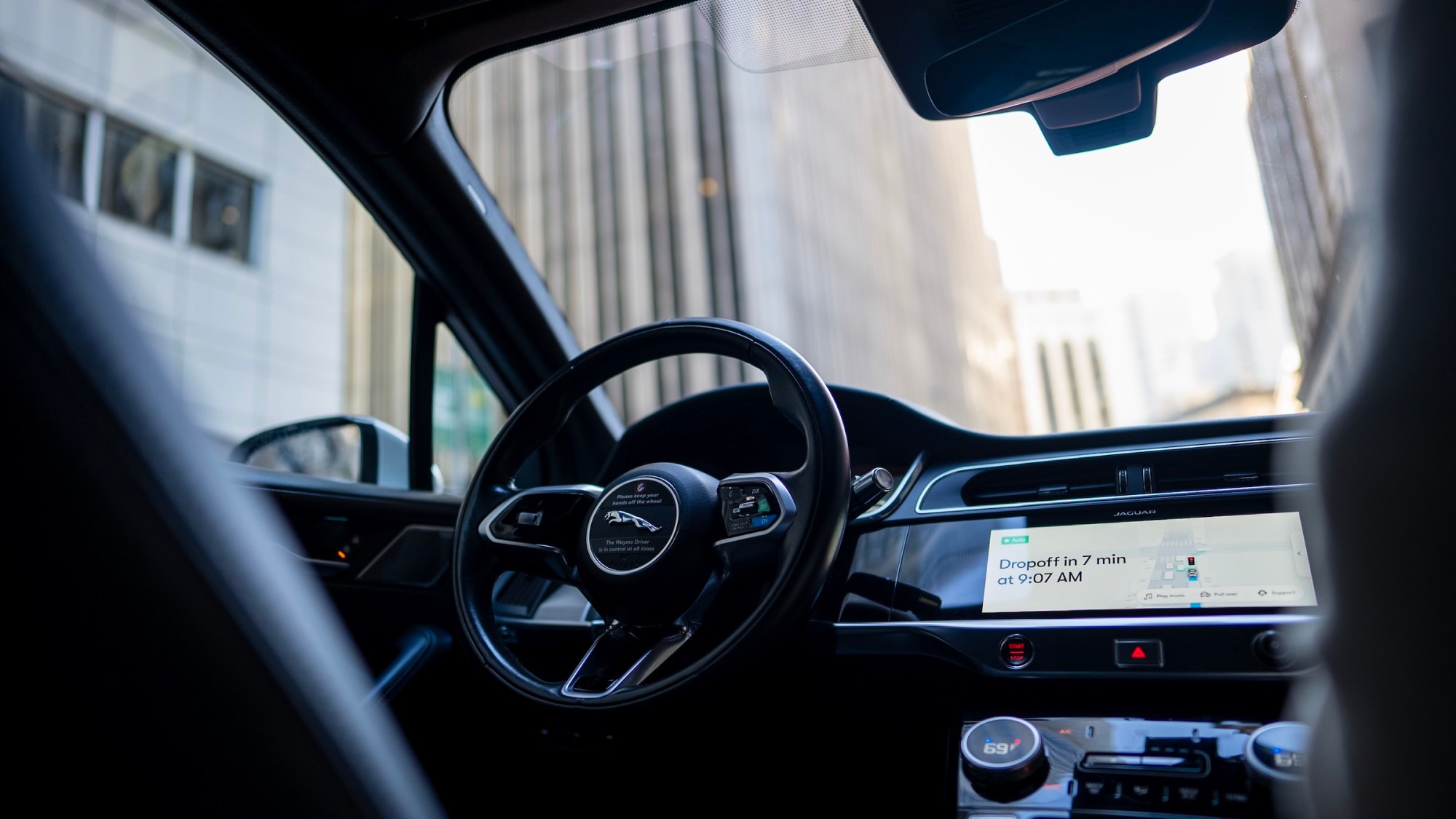
Waymo, the self-driving taxi service developed by Google, is the latest great example. A “first Waymo ride!” Instagram story feels almost obligatory. And even just seeing them everyday in the wild, driving around sans chauffeur with their funny LIDAR dome, is still a tiny thrill.
My first Waymo trip, earlier this summer, started off more in the spirit of a Curb Your Enthusiasm scene, as I had to chase it around a parking lot before it finally looped back around and let me in. It then took an ill-advised route down one of those one-lane, two-way Venice Beach streets, which created enough of a clusterf— that people started yelling at me (as if I had a say! Larrrrry!).
But after a quick manual override to navigate, the situation vastly improved, and the ride to Beverly Hills in my climate-controlled Jaguar SUV was comfortable, quiet, and felt safe. (My second ride, a few weeks later in San Francisco, was flawless, fwiw.) Aside from a few minor quirks that likely wouldn’t have happened with a human driver, it’s easy to see why consumers generally report positive experiences: The Waymo was much more pleasant than an Uber or Lyft, required zero awkward smalltalk, and was competitively priced.
Well over a decade in the making, Waymo, first known as Google’s self-driving car project, is actually working: It’s doing hundreds of thousands of paid, fully autonomous rides per week in five US markets — LA, the Bay Area, Phoenix, Austin, and Atlanta — with Miami, DC, Nashville, and London in the works.
And it’s still early, but Waymo is already capturing meaningful market share.
In the Bay Area, Waymo represents about 5% of consumer spending among the rideshare trio of Uber, Lyft, and Waymo, according to Consumer Edge, which tracks credit and debit card spending data.
Chart of the Day
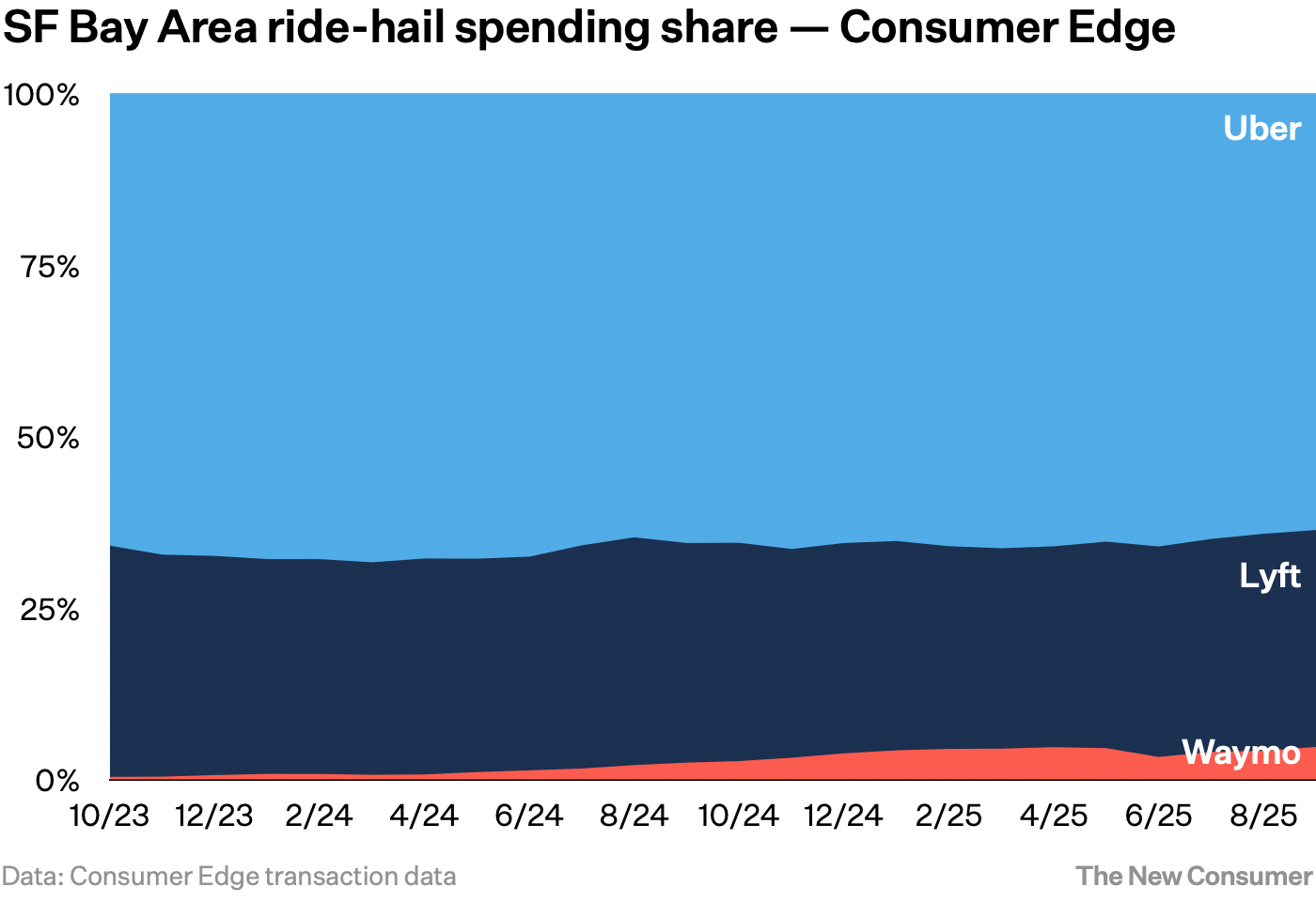
That’s despite Waymo’s small fleet and finite service area — no airport trips and limited freeway driving, though it has recently won approval to start operating at SFO and SJC.
And early adopters love them: In our latest Consumer Trends survey of more than 3,000 US consumers, conducted this July by Toluna, 57% of respondents said they were aware of self-driving taxi services like Waymo. Among those aware, 13% said they had already taken a ride. And among riders, 89% said they’d take another. Once you’ve taken a Waymo, it’s hard to willingly go back to a grubby UberX.
The big leap that consumers are taking with Waymo, obviously, is trusting their lives in the hands of a machine.
The New Consumer Executive Briefing is exclusive to members — join now to unlock this 1,900-word post and the entire archive. Subscribers should sign in here to continue reading.
Hi, I’m Dan Frommer and this is The New Consumer, a publication about how and why people spend their time and money.
I’m a longtime tech and business journalist, and I’m excited to focus my attention on how technology continues to profoundly change how things are created, experienced, bought, and sold. The New Consumer is supported by your membership — join now to receive my reporting, analysis, and commentary directly in your inbox, via my member-exclusive newsletter. Thanks in advance.