
Executive Briefing
The pressure is on for non-alc startups
It’s a must-win Dry January in a can’t-lose year for the category.
 By Dan Frommer on Wednesday, January 10, 2024 at 8:00 am
This post is also available as a podcast. To get The New Consumer Audio Edition in your podcast app, become a member or sign in.
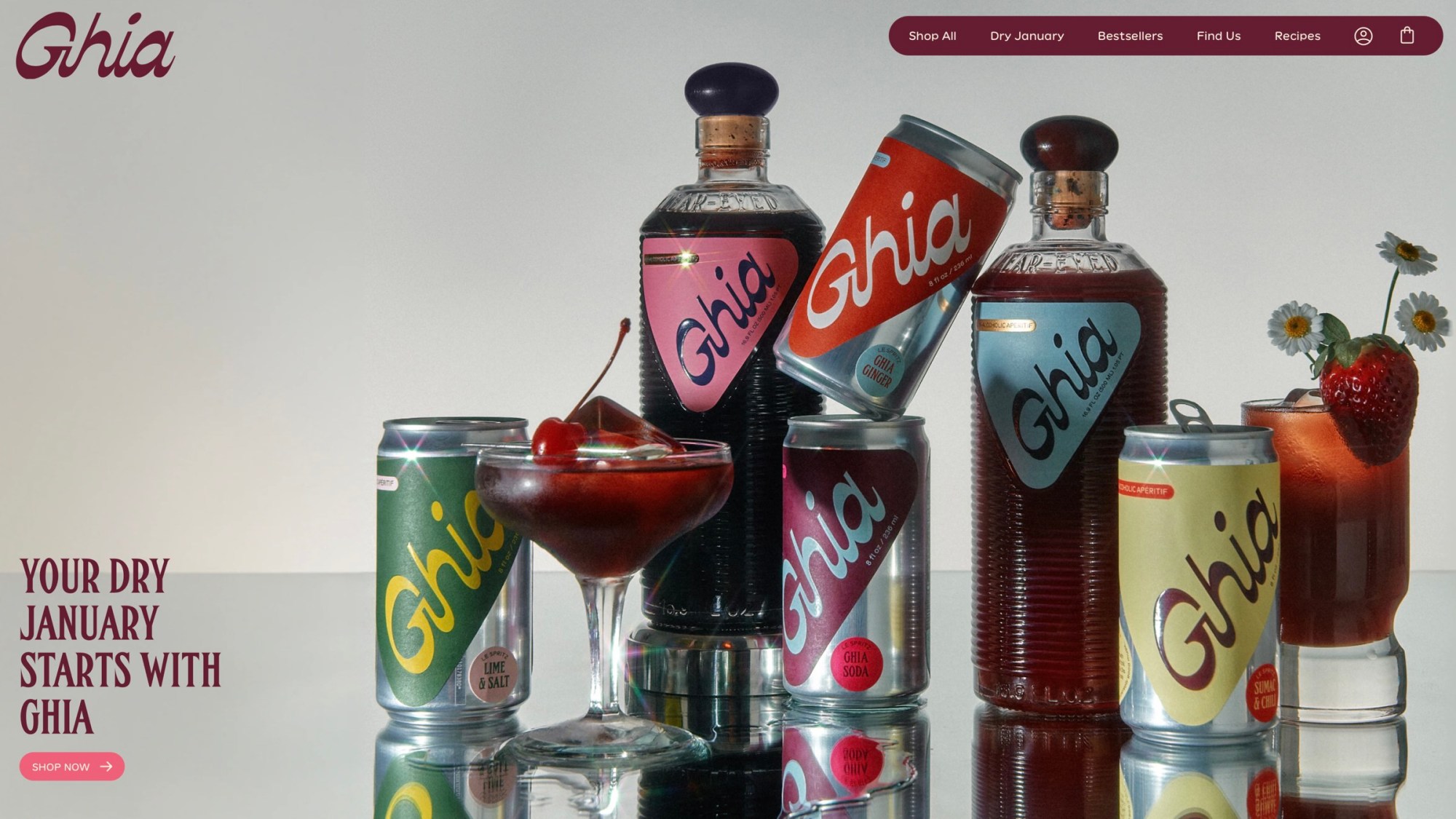
The mass commercialization of Dry January, I suppose, was inevitable. This month, I’ve already been marketed decaf coffee, weed drinks, and — of course — many varieties of nonalcoholic beverages, using the Dry January hook.
How many people “do” Dry January? The numbers I’ve seen are all over the place: Last year, 15% of US consumers (down from 19% in 2022) according to Morning Consult polling; 35% in 2022 according to NielsenIQ’s CGA; 27% “very likely” last year, up from 2022, according to CivicScience (concentrated among younger consumers).
These are surveys, so they only reflect what people say — not what they do. Let’s assume the percentage of drinkers who actually abstain for the whole month is somewhere between 5% and 10% — not massive, but still significant.
Perhaps more important, it’s an undeniable part of the cultural conversation. In the US, Google search queries for Dry January set a new high this year, while January searches for Whole30 — a more elaborate “reset” — seem to be on the decline.
The rest of this post is for paid members of The New Consumer.
Join for or .
Already a member? Sign in here.

Hi, I’m Dan Frommer and this is The New Consumer, where consumer operators, founders, and investors get the real read on what’s happening — original reporting, proprietary data, and sharp analysis you can take into your next meeting.
You’ll get my newsletter, read by leaders at Sweetgreen, David Protein, Forerunner, and L Catterton. Plus Consumer Trends, our research series cited by the Wall Street Journal, Axios, and WWD.
Not ready to join? Start with a free account.