
Follow the Money
DTC isn’t dead
It’s just different now.
 By Dan Frommer on Friday, April 24, 2026 at 8:00 am
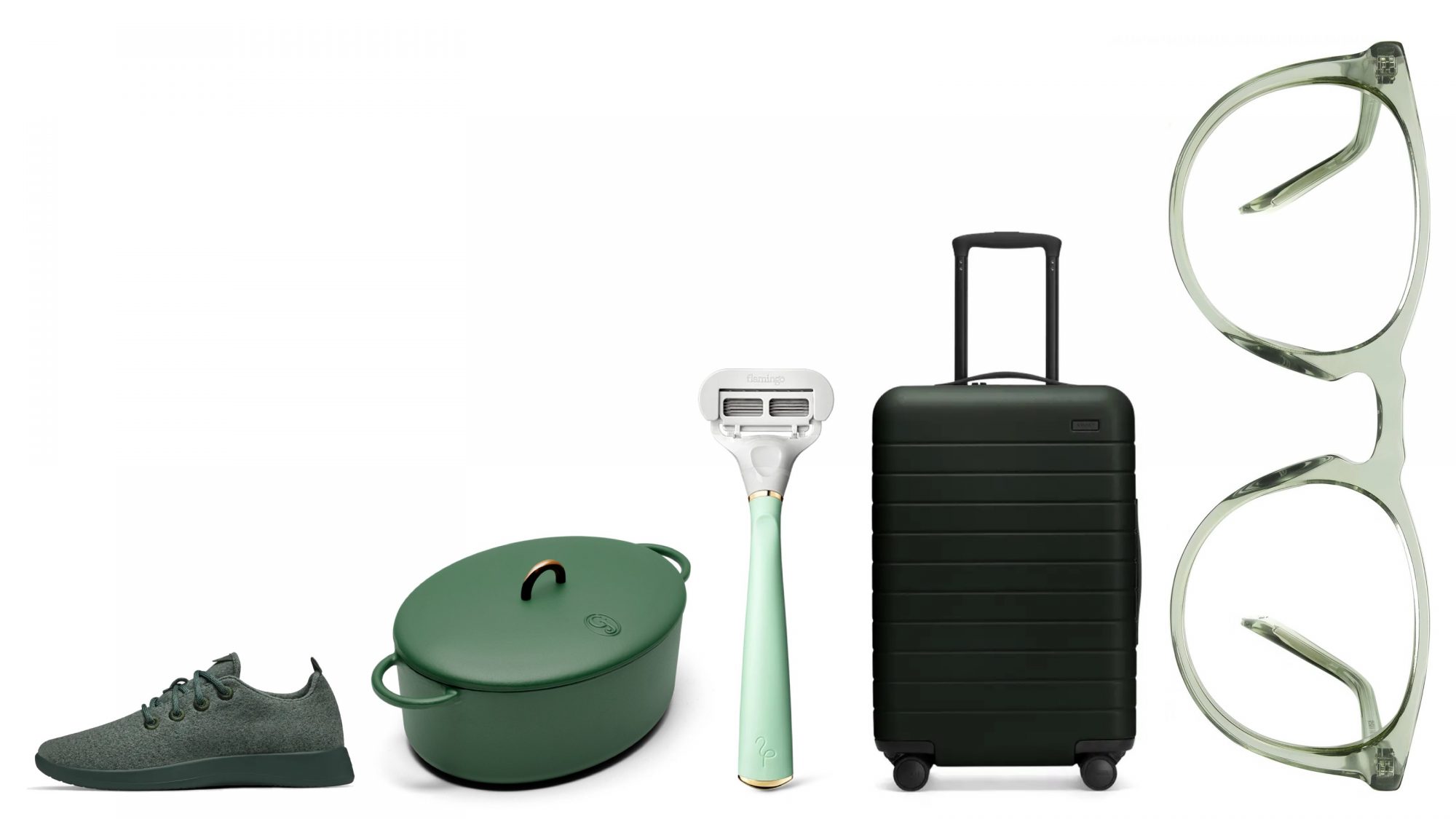
Allbirds’ recent fire sale to a licensing firm — $39 million for the shoe brand’s IP and assets, after peaking at a $4 billion market cap on the Nasdaq — marked a new low point in the direct-to-consumer e-commerce canon.
Let’s be clear — this was a disaster. But Allbirds’ failure doesn’t speak for the whole model.
Presented by Shopify
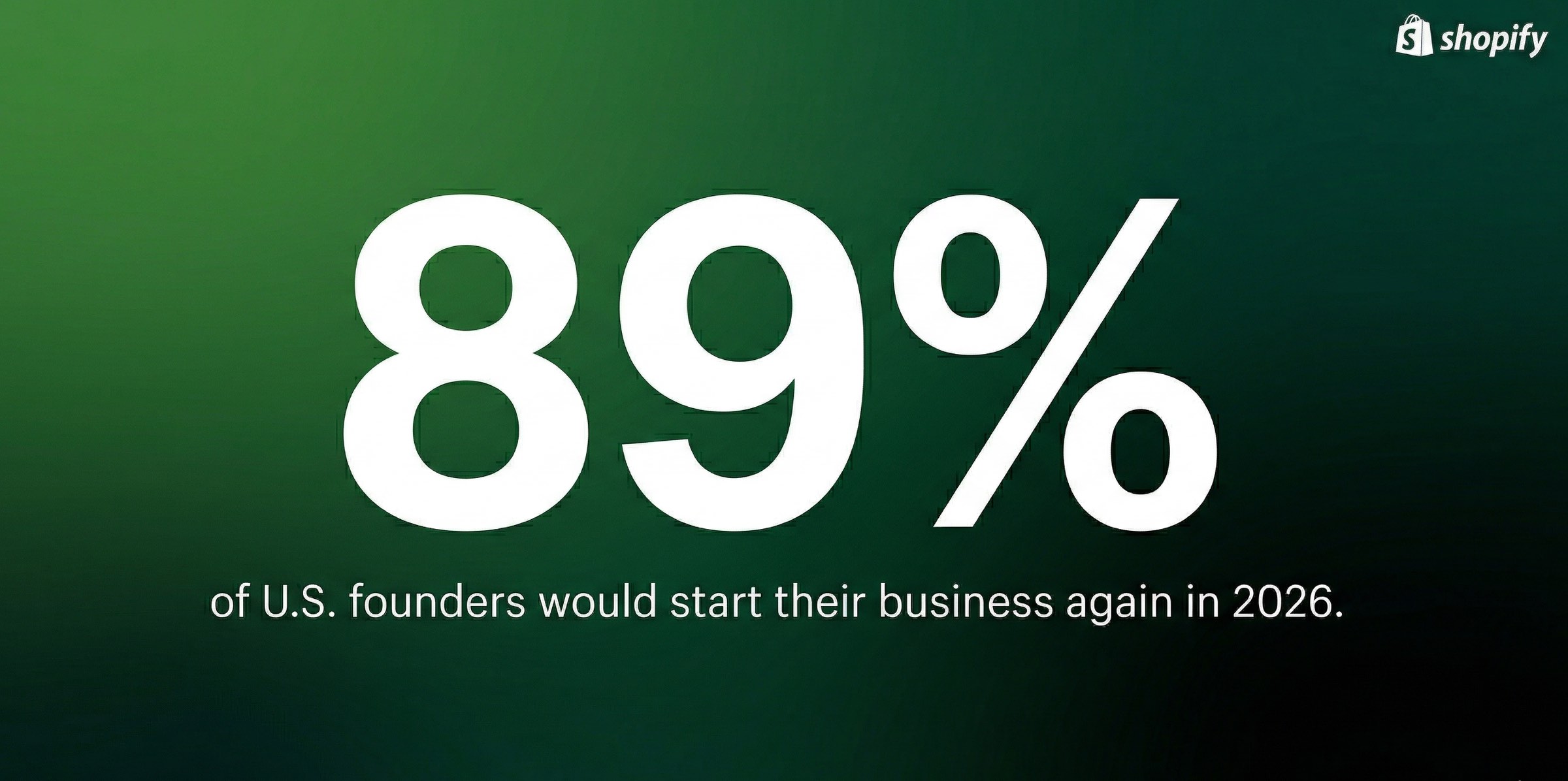
89% of US entrepreneurs would start their business again in 2026. Here’s why. —
The conventional story about entrepreneurship goes like this: It’s a risk worth taking, but 9–5 employment is the safer bet. New research from Shopify and The Harris Poll says otherwise.
In a survey of US business owners, respondents were more than twice as likely to say owning a business feels more financially secure than holding a traditional job (39% vs. 18%). Most also said starting their business felt less like an escape and more like a move toward something they wanted: Greater control, flexibility, and meaning.
But it’s more than conviction: 89% of US founders say they’d make the same choice again in 2026. The barriers that once made entrepreneurship feel out of reach are coming down. 86% of US founders say e-commerce platforms have made it easier to start a business than a decade ago. 67% say AI tools are making entrepreneurship more accessible, compressing what once required a team into something a solo founder can do alone.
The hard part of building a business used to be getting started. Increasingly, it isn’t. Read the research and hear from the founders bringing this data to life.
The truth is that DTC — the concept of brands selling products directly to customers over the internet — is alive and well. It’s just different than what some had hoped it’d become a decade ago, when a lot of smart people made a lot of misplaced assumptions about consumer behavior and economics.
And so when the New York Times, covering the Allbirds sale, makes assertions like “much of that direct-to-consumer luster has been lost,” it highlights a problem: “DTC” still means different things to different people.
Direct-to-consumer has long been, and remains, an important sales channel for many types of brands. But in the 2010s, it also became a shorthand — “DTC brand” — for a certain type of company-building and digital-native brand approach. And then there was the “DTC era,” where venture investors poured money into these sorts of brands, thinking they had an unfair advantage for the next generation of consumers, and would command premium valuations.
Since the Allbirds sale got people talking in recent weeks, I thought now would be a good time to take a look at the state of DTC: What it is, what it isn’t, what it wasn’t, and what it will become. The truth is more complex and nuanced than “DTC brands didn’t work.”
What’s working
It’s actually pretty easy to make a list of brands generating hundreds of millions of dollars of revenue — even more than a billion — in direct-to-consumer e-commerce sales.
Hims & Hers, the online pharmacy that’s almost entirely DTC, reported $2.2 billion in US revenue last year, up 53%. Quince, the fast-growing clothing and accessories brand, said its total revenue passed $1 billion last year. Hungryroot, an online meals and grocery subscription business, announced $700 million in net revenue for 2025. ButcherBox, a DTC meat subscription, generated more than $500 million in sales in 2024. Rhode, the skincare brand, passed $200 million in DTC sales in a yearlong period ahead of its $800 million acquisition by Elf.
Here’s how a broader set of brands performed last year.
This is each brand’s estimated online sales for 2025, as provided by Consumer Edge, which tracks US consumer credit and debit card spending. I’ve indexed Quince to 100, so you can get a sense of how the following brands performed last year, relative to Quince, among Consumer Edge’s card transaction data.
The rest of this post is for paid members of The New Consumer.
Join for or .
Already a member? Sign in here.
Hi, I’m Dan Frommer and this is The New Consumer, where consumer operators, founders, and investors get the real read on what’s happening — original reporting, proprietary data, and sharp analysis you can take into your next meeting.
You’ll get my twice-weekly newsletter, read by leaders at Sweetgreen, David Protein, Forerunner, and L Catterton. Plus Consumer Trends, our research series cited by the Wall Street Journal, Axios, and WWD.
Not ready to join? Start with a free account.