
In Conversation
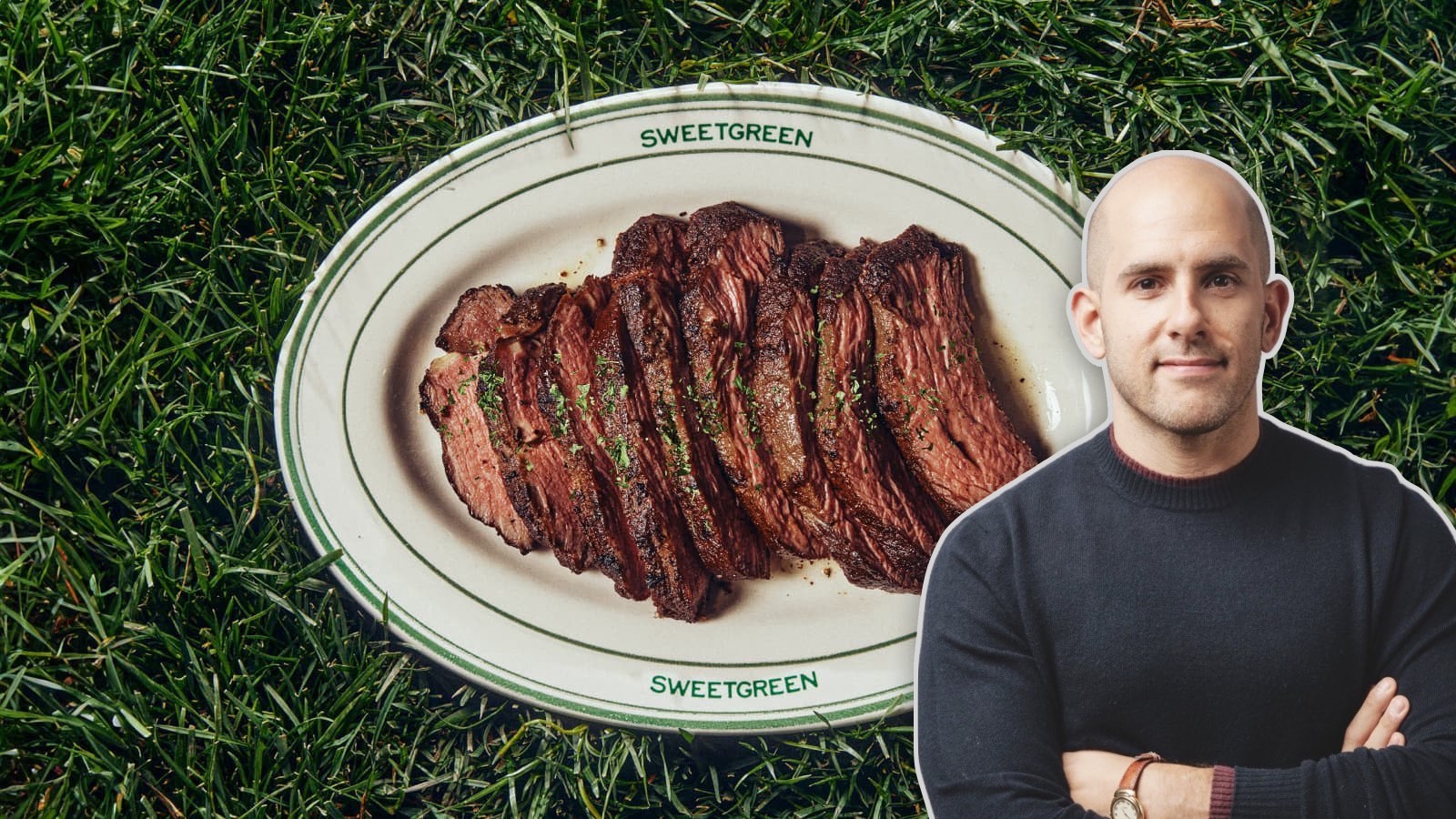
Why Sweetgreen added steak
Co-founder Nicolas Jammet on the new dinner strategy, robot kitchens, and expanding beyond the lunch crowd.
 By Dan Frommer on Tuesday, June 4, 2024 at 8:00 am
This post is also available as a podcast. To get The New Consumer Audio Edition in your podcast app, become a member or sign in.
Sweetgreen built its name and business selling healthy salad lunches and grain bowls in big coastal cities. Now, 16 years in and with more than 225 restaurants, it’s growing across America, opening recently in Wisconsin and Seattle, with Ohio and North Carolina locations coming soon.
As it’s expanded and entered new markets, it’s been tweaking the formula. Sweetgreen recently introduced steak to its menu, intended to appeal to a broader range of consumers and to improve its business during dinnertime. It’s also entering a larger pilot phase of a new store format, designed around a robotic salad assembly machine called the Infinite Kitchen.
More broadly, after a period of slower growth — and disappointing launches in some of its new markets during the pandemic — it’s now re-accelerating its national expansion.
Starting next year, Sweetgreen plans to grow its footprint more rapidly again, expanding its number of locations by around 20% per year in 2026 and beyond, co-founder and CEO Jonathan Neman said on the company’s most recent earnings call.
And its latest openings are working: The stores it opened during the first quarter of this year have average weekly revenue that’s already outpacing the existing fleet, Neman said. Sweetgreen’s stock price has tripled since mid-January, as investors have welcomed the combination of faster store openings and its improved margins — suggesting this brand might actually work across the country.
I think the steak launch is particularly interesting, for a bunch of reasons — how it tastes, how it’s prepared, how it’s positioned — but also because of what it shows about how Sweetgreen creates and ships new products today, at this stage in its growth and evolution.
Everything from the sourcing and cooking to training and marketing needed to be different now than, say, when the company rolled Pacific Northwest steelhead out across its fleet in 2016, back when it had a fraction of its current stores open.
For instance, this time, Sweetgreen decided not to source locally: Most of its beef is coming from Australia and New Zealand. And while Sweetgreen is very proud of how much of its ingredient prep happens every day in each of its restaurants, steak is coming in already cooked — low and slow, sous vide style — with just a final roast, cut, and olive oil-and-herb baste in-store before it’s served.
After a test in some LA restaurants this year — and a market-wide test this spring in Boston — steak launched nationwide on May 7, leading to a record-breaking sales day, according to the company. It had been tweaked in many ways since those early tests, ranging from its marinade to its shape, landing on a cut that allowed for better coloring.
I’ve tried it twice: The first time was very good, and the second wasn’t. But overall, people seem to like it. And this seems important enough that Sweetgreen will need to figure out how to get it consistently right.
To learn more about how Sweetgreen did steak — and how it’s thinking more broadly — I spoke with the co-founder who’s closest to the food, Nicolas Jammet, the company’s chief concept officer. What follows is a lightly edited version of our conversation. Members can listen to this interview as a podcast.
In this interview:
- Why and how Sweetgreen just launched steak
- How the company develops products at this stage of its growth
- Balancing simplicity and complexity in culinary ops
- Sweetgreen’s view on the protein trend
- Why robotic kitchens are a key part of Sweetgreen’s future
- How Jammet thinks about celebrity collaborations in 2024
- What goes into new market launches
Dan Frommer: Let’s start with the new stuff. It’s steak, but it’s more than steak.
Nicolas Jammet: We are really excited to have just launched steak. But zooming out a bit, it’s really been a broader evolution and broadening in what Sweetgreen is: Where we are, where we’ve opened, and what we serve in the experience.
If you look at our journey over the last 16 years, what we serve on our menu has really broadened. We’ve taken some big steps in the last year, specifically launching Protein Plates, which is a whole new category for us, and more recently steak, in addition to some of the new proteins from last year.
And so it’s just been really exciting to reach more people with our food. We’re still really energized by the food ethos that we make all of our decisions by. Taking it back all the way to day one, the reason we started Sweetgreen was to redefine fast food, and create a different type of fast food experience and offering that could be craveable and delicious, but good for you.
And you still do that. And so steak is not a new concept in American fast food, but it’s new for Sweetgreen.
Let’s use this as a bit of a case study about how Sweetgreen ships new products in 2024. How did you decide: We’re going to start selling steak now? And how did you develop this from concept to launch?
A few ways. We’ve spent a lot of time thinking about the evolution and the journey that we want our menu to evolve to. And just thinking about the company we are today — at 230 locations in almost 20 states — versus where we were a few years ago. We really want to think about reaching more consumers.
And so it’s really exciting to think about where the Sweetgreen menu can go. There’s a huge pipeline of ideas and categories and products and flavors that we’re excited to be thinking about testing. And some of those will make their way onto the Sweetgreen menu one day.
But we also spend a lot of time listening to our customer, and listening to customers that we want to invite into Sweetgreen — understanding intent to purchase, need states. How Sweetgreen makes them feel, who has heard of Sweetgreen, what they’ve heard about Sweetgreen — understanding as much about the customer and future customers as possible, to inform how we want to feed that evolution of where Sweetgreen can can grow to.
Steak is something we’ve heard a ton from existing customers, new customers, and so we decided to really explore that and see how we would do it the Sweetgreen way.
Adding beef to our menu for the first time meant learning about a whole new supply chain. We spent time trying to be thoughtful and to understand how we would do it in a way that fits our ethos and that we’d be proud of, and really checks the boxes across all of our inputs and thoughts around nutrition, environmental impact, obviously taste. We wanted to make sure that we could come out with a product that we’re super proud of. And after a long, many months — almost a year — of iterating and testing, it’s finally live and we’re excited.
The New Consumer Executive Briefing is exclusive to members — join now to unlock this 5,300-word post and the entire archive. Subscribers should sign in here to continue reading.
Hi, I’m Dan Frommer and this is The New Consumer, a publication about how and why people spend their time and money.
I’m a longtime tech and business journalist, and I’m excited to focus my attention on how technology continues to profoundly change how things are created, experienced, bought, and sold. The New Consumer is supported by your membership — join now to receive my reporting, analysis, and commentary directly in your inbox, via my member-exclusive newsletter. Thanks in advance.