
Brands
You say you want to eat more, better vegetables. Here’s your chance.
Row 7’s veggies are optimized for flavor, now available at Whole Foods. Can Dan Barber and a community of chefs inspire Americans to eat healthier?
 By Dan Frommer on Saturday, October 19, 2024 at 8:00 am

When you ask thousands of Americans to list the things they want to consume more over the course of the next year — as we do as part of our annual Consumer Trends Food & Wellness report — around half of them type the same thing: Vegetables.
Whether it’s to eat healthier, wishfully think like they’re going to eat healthier, to eat less meat, to consume in a more environmentally friendly way, or simply because they’re delicious, “vegetables” has been the most popular response both times we’ve asked that survey question (followed by fruit, protein, water, and fish).
Today: A look inside Row 7, a fresh produce and organic seed startup obsessed with flavor — that’s trying to make it easier for consumers to eat more vegetables and actually enjoy them. Members can listen to this as a podcast by adding The New Consumer Audio Edition feed to their player of choice, including Apple Podcasts and Spotify.
We’re going to get into some big ideas in a minute, so let’s start with something simple: The best thing I’ve eaten this fall is a small squash from the grocery store, roasted in a toaster oven, with a little bit of crunchy salt and a few sage leaves I’d fried in butter.
This was no ordinary squash, but you can potentially make one tonight: It was a Honeypatch from Row 7, now available at hundreds of Whole Foods stores on the East and West Coasts.

The Honeypatch, like many of Row 7’s products, has a good backstory.
“I had this experience with this guy who walked in the kitchen 14 years ago,” recalls Dan Barber, co-founder and CEO of Row 7, and chef-owner of the two-Michelin-star Blue Hill at Stone Barns restaurant in New York. “He was a squash breeder from Cornell University.”
“I had heard he’s a very talented squash breeder. So [he] came in the kitchen, and I didn’t know anything — I just sort-of awkwardly said, ‘If you’re such a great squash breeder, why don’t you breed a butternut squash that actually tastes good? Why are we adding maple syrup and brown sugar to a thing — [going] through these hula hoops to make it taste like squash?’”
“And he got very serious, and he said, ‘The reason I’ve never created a butternut squash that tastes good is that no one’s ever asked me to breed for flavor’.”
“Charlotte [Douglas, Row 7’s president and a longtime Blue Hill colleague] always says, ‘That that was the beginning of the company. We just didn’t know it’.”
That encounter led to the Honeynut squash, a small butternut that’s naturally sweet, delightfully squash-y, and available at tens of thousands of stores across the US. “It is now dubbed the ‘money nut’,” Barber says, “because people pay more for it.”
That, then, led to the Honeypatch, a new iteration that can grow much later in the season, staying in stores until at least February. (That’s the one I’ve been cooking this fall.) And that squash breeder, Michael Mazourek, became a co-founder of Row 7, which launched as a seed startup in 2018, and now works with a network of more than 50 breeders.
Row 7’s line of fresh vegetables has grown to more than half a dozen, and if you start looking, you’ll notice them showing up in more parts of the produce department at Whole Foods, part of an exclusive partnership that started on the East Coast in 2022 and expanded to California and the West Coast this summer.
In addition to the Honeypatch, Row 7 has another winter squash called the Koginut — rich and nutty, a great candidate for Japanese curry, and a once-featured ingredient at Sweetgreen.
The company’s Upstate Abundance Potatoes actually taste like potatoes, and are naturally creamy without needing to add butter or dairy. “You boil this with a ton of salt, you drain it, and that is all you do,” Barber says. “Don’t add anything else, and you’ll have an otherworldly potato experience on your plate.”
(Thanks to a “particularly successful” growing season, the Koginut squash and the potatoes — they’re in a bag — will both be available at Whole Foods stores nationwide starting next week.)

Row 7 offers something resembling an extra-large scallion, called Sweet Garleek, developed by allium breeder Hans Bongers. Its website description reads: “Have you ever wondered what would happen if a garlic and a leek made a baby? We did.”
I grilled a bunch late this summer, slathered them with romesco, and could have sworn it was calçot season in Barcelona. They’re also delightful in a frittata! Or as a substitute for the leeks in Alison Roman’s excellent Potato Leek Soup recipe.
Its Midnight Roma tomatoes actually taste like tomatoes — deep and rich; an elevated base for homemade sauces, or a killer caponata. Et cetera.
I’ve been fascinated with Row 7 for a few reasons.
First, because Barber has a point: Most vegetables, even at nice grocery stores, just don’t taste like much. The giant companies that dominate the American food chain have many priorities, but flavor isn’t near the top of the list. “And breeders don’t talk to chefs,” he says. “So chefs aren’t at the table.”
You can get lucky if you have access to a good farmers’ market, or a produce-forward store like my tiny local, Cookbook, which sources directly from farms. But that’s asking a lot of consumers, who already often lack the time to cook for themselves, let alone to forage for nutritious, great-tasting ingredients.
So if the goal is to make it easy and exciting for people to eat more vegetables — specifically as the main part of a meal, or at least a more “center of the plate” feature, as opposed to a side-dish afterthought — Row 7 and its flavor-tuned vegetables could play a smart role.
If there’s one thing I’m an activist and champion for in this business, it’s “Real Food.” So I’m excited to see the effort here — creating it, investing in it, providing access to it, and inspiration to consume it.
Second, because if Row 7 does work, it could make a dent in what’s become a highly problematic US food chain, dominated by chemicals, processing, and giant corporations that are not focused on flavor or health.
I’m going to be honest: When conversation shifts to “the food system,” I tend to tune out — it’s just such a big, complex problem, and it doesn’t seem like something individual consumers can do much about, not to mention our distracted, culture-wars-afflicted government. Dan Barber talks about it at length in this interview at the Aspen Ideas Festival; it’s worth a watch if you have an hour.
But consumers can vote with their wallets, and if there’s an opportunity to support something that — bit by bit, seed by seed — can make a change from the bottom up, that’s something to take note of.
In addition to organic farming with organic seeds, Row 7 only grows with a network of smaller regional farms; it publishes the list on its website. Most of the mass-produced vegetables sold in the US are grown in specific regions — California, Arizona, Mexico, etc. — and shipped thousands of miles before they’re sold and consumed. Row 7’s produce, meanwhile, is grown much more locally, and that will continue to be a key part of its model.

And third — and perhaps most interesting from The New Consumer POV — is that Row 7 is trying to build a generational brand in the fresh produce department, a section of the grocery store where there are few brands at all, let alone good ones.
The past decade or so has seen a profound reinvention of grocery store products and brands, especially at natural grocers like Whole Foods and Sprouts, but increasingly at mass outlets like Target and Walmart, too. And many new category-defining brands have been built on top of big shifts in consumer tastes and modern brand values, from “better-for-you” snacks and beverages to premium spices and baby food.
But that brand explosion hasn’t really happened in the produce department — other than perhaps Cuties, the branded clementines — where products tend to be more commoditized, less differentiated, and often brandless.
“What we’re trying to do, which feels different, is really solve this pain point of making vegetables delicious,” says Elizabeth Mahler, Row 7’s chief operating officer, who grew up in the grocery industry and joined the company full-time in 2023 after years at General Mills. “So many consumers are not satisfied. They don’t look forward to the vegetables on their plate.”
“Part of creating a brand is we have to — and I think we are — really doing that differentially,” she says. “For me, what has to be true for us to be successful is that it is so demonstrably different that we could create meaning and create a brand there.”
To make it work, Row 7 will have to do more: Not just develop and distribute differentiated vegetables, but also teach people what to do with them, so they want to buy and eat them over and over.
So the company has been — as most grocery brands must do, to be successful — hitting the pavement.
This year, it’s planning to serve around 100,000 portions of its vegetables in tastings across much of its Whole Foods footprint. Over the summer, it hired around 40 cooks to run its in-store demos, sautéing Sweet Garleek, giving consumers their firsts tastes of something different, and “creating those conversion moments,” Mahler says. These tastings are expensive and don’t scale like digital ads, but they can uniquely build one-on-one connections (and two-way conversations) with consumers.
“When people look at fruit,” she says, they generally know how to eat it. “But when they see a vegetable, they kind-of see a to-do list, ‘What am I going to do with it?’” These tastings, then, ideally show that it can be very simple to prepare a vegetable, particularly one that’s been bred to taste good: “I’m just going to go home, I’m going to sauté it, I’m going to throw some salt and pepper on it, and I know what I’m going to do.”
This is crucial. Many consumers picked up a bunch of cooking skills (and equipment) during the pandemic, and now have higher expectations for what home-cooked meals can be. But few have the time they did in 2020 and 2021 for complex, ambitious kitchen adventures. So maximizing quality and convenience is key to today’s home-cooked meals market.
(In addition to the tastings, I’d encourage Whole Foods to try doing more with its in-store merchandising and displays. There’s room for more experimentation and education in the produce department, and across departments — especially when there are brands trying to do something unique and mission-aligned. I’ve seen more graphics and featured placements, which is a start. But it feels like a bit of a missed opportunity to see Sweet Garleek shoved in the same anonymous cases next to regular leeks, with just a slightly larger, branded hangtag.)
For more elevated inspiration, Row 7 is also leaning heavily on its connections to chefs and the culinary world, including pop-ups inside and outside of restaurants, and making noise in the right places on Instagram. Chefs have long played a role in Row 7’s research and development process — tasting products, offering feedback — and they’re key characters in its marketing, too.

For instance, for the company’s Sweet Garleek launch in California this summer, it did pop-up samplings at farmers’ markets in San Francisco, Hollywood, and Santa Monica, and outside popular restaurants like Osteria Mozza, Pine & Crane, and Kismet in Los Angeles. If you were in the right place at the right time, you could catch Barber driving around in a Row 7-branded mini truck, trunk full of vegetables.
Kismet then put a Sweet Garleek borek bread (pictured below left) on its menu for a month. Another LA restaurant, Yangban Society, offered a totally different Sweet Garleek bread (center). In Portland, Ox partnered with Row 7 to “enhance some of our favorite dishes” with Sweet Garleek, including a wood-fired halibut dish and another with mushrooms, spinach, and soy-cured duck yolk.
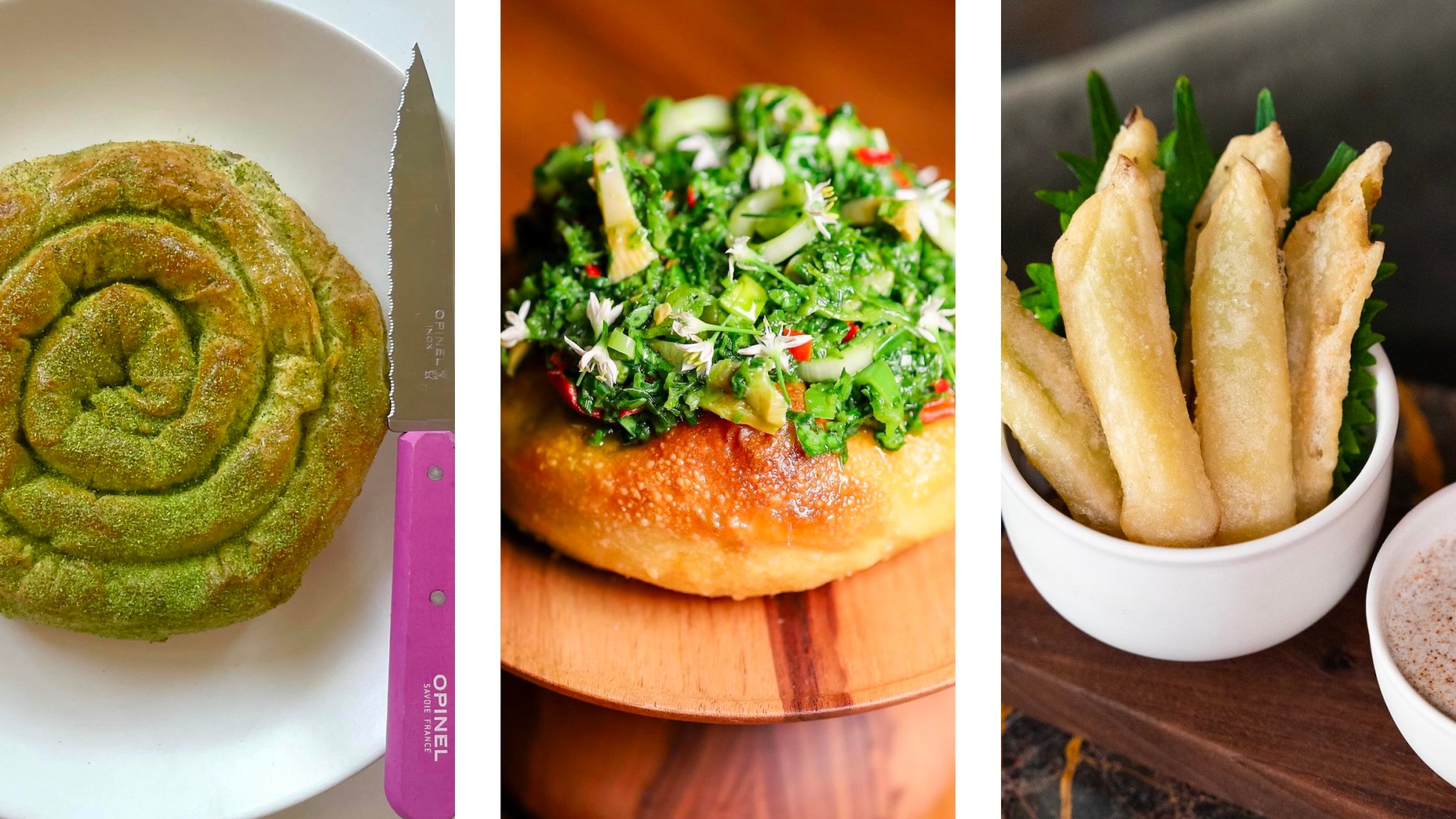
Eleven Madison Park showed off its latest bar snack, Sweet Garleek tempura (above right) served with seaweed cream and fresh shiso leaves — something I will be trying to replicate at home one of these days.
Around that time, you could also catch chefs and food influencers experimenting with Sweet Garleek on their Instagram Stories, including at the beloved LA pizza restaurant Quarter Sheets. In September, Row 7 organized a pizza week, where restaurants in San Francisco and DC featured its ingredients, and then later a sandwich week.
(In addition to selling to consumers at Whole Foods, Row 7 plans to increasingly sell into restaurants and the foodservice channel via high-end purveyors like Baldor.)
“We’re getting the cultural capital that comes from chefs and creating movements,” Mahler says. “The kale movement in this country, avocado toast… We study these things. The acreage of crops in this country — kale and avocados — it corresponded to the chef community really getting behind it.”
And if chefs can’t get Americans to change their eating habits, who will?
When I ask Barber why he’s spending his time on this (when he can do anything), and why chefs are an important vector here, he sort of answers my question with another (arguably better) question.
“Who is affecting change? And I mean that as an open-ended question — like, who is? I don’t think it’s the medical profession. I don’t think it’s the political establishment. I don’t think it’s legal people, and it’s not farmers on their own, because they just don’t have enough power and agency.”
“I’m not here to trump up the power of the chef,” he adds. “And, you know, the idea that I can do anything — I don’t subscribe to that. But I do subscribe to the idea that the chef… A chef like me, and I think most chefs, feel energized by the idea of feeding people. And that we have the opportunity to feed a lot more people, nutritionally, deliciously, and in a way that improves how the world is used. It’s a very tantalizing opportunity.”
How big can Row 7 get?
Part of that will depend on how successful it is at getting consumers to notice, try, and enjoy this first wave of branded vegetables at Whole Foods, which are attractively packaged, but also a little quirky, and priced at a premium. (A friend balked when I told her that the bunch of Sweet Garleek in her hand, for all its unique deliciousness, cost $6, significantly more than leeks or scallions.) So all of this matters right now.
But there are also many opportunities throughout the grocery store, from pickled versions of its sweet, no-heat Habanada Peppers, to the frozen and canned aisles, to applying the Row 7 philosophy to other categories like grains.
The company decided to start with fresh produce for a few reasons: It’s a massive category (more than $90 billion in the US over the past year, and growing, according to market research firm Circana) that every consumer in the country shops (99% household penetration). The flip side is that margins tend to be lower: Closer to 15% gross margins in produce, on average, versus 30s and 40s in packaged goods, according to Mahler.
“But what’s interesting in produce,” Mahler tells me, “is that the consumer has a mindset of discovery.” In the center aisles of a grocery store, they’re crossing things off a checklist — “It’s a race to the register. But when you’re in produce, what’s really surprising to me is, like, people are picking up, they’re touching, they’re looking at something, they’re adding things to their cart that wasn’t on their list.”
All of this matters because if Row 7 is going to be successful in changing how many people eat — specifically, eating more organic vegetables — it’s going to have to sell a lot of vegetables. It can’t really make a dent in the system unless it can become a very big business itself.
When I pose this to Barber, he bristles a little.
“I think you’re coming at it from top-down on that perspective,” he says. “I’m coming at it from bottom up.”
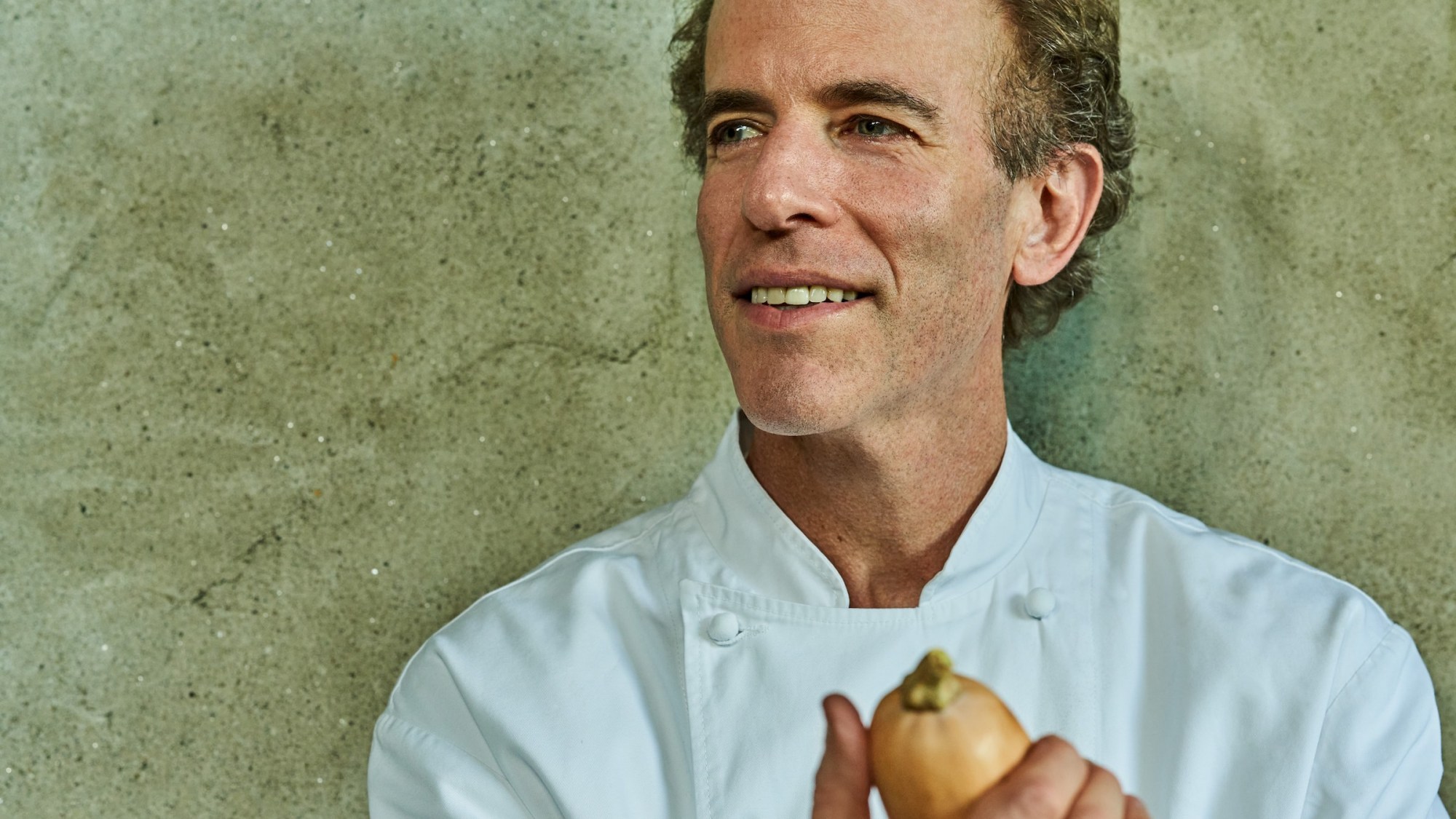
“And maybe that’s because I’m not, like, an Elon Musk guy — I think the possibility here is to spread an idea, and the idea is actually very small. We’ve got to retrench. Our food system needs to retrench. We can’t be shipping water all over the world. We can’t do that for the environment. We can’t do it for our health. We can’t do it for do it for farmer equity. We can’t do it for open space. We can’t do it for environmental functions, all these things. It’s too expensive.”
Becoming a big company for the sake of becoming a big company — that’s not the driving force here, he says. A main point of Row 7 is biodiversity, which can only scale so far: “We have a biological constraint that’s very interesting.”
But, yes, the company has investors — including Stephen McDonnell, the founder of Applegate Farms, and Walter Robb, the former co-CEO of Whole Foods — and is a for-profit entity. “So it’s not like I’m allergic to scaling this stuff,” Barber says. Just… “if we become doped on scale, we’re going to start making decisions very quickly that trip us up.”
“And so my hope is that we have the runway with the investing community — which is really about patience — to build the trust of farmers regionally, to build the genetic profiles to excel in a regional context, and build momentum that way.”
“If that means, in the spreading analogy, that other companies start to adopt it, and that Row 7 becomes a little less big — so we don’t become the Walmart of the seed world — okay, that might be a good thing. I don’t know that I accept your maxim as truth. Because in a world where we need to become more localized and smaller, we need to think about scale, I think, in a very different way, especially when it comes to food.”
I appreciate the realness here, and he has a point. If Row 7 is truly successful, its biggest success may be creating a consumer force that pushes others to change the way they operate, and inspires more new food businesses to start with like-minded practices.
I also like Mahler’s answer to my “how big can this get?” question: “Oh my gosh. It’s going to be huge.”
“When you think about vegetables, everyone in this country eats vegetables — most people would say they have a problem not eating enough vegetables. So when you think about the size of the problem, it’s enormous, and people want to find joy there. And when I think about the power of what we’re doing, and how big this business could be, could we be a billion-dollar brand someday? Yes.”
“I think about big vegetable brands that are out there, and there’s not a lot of innovation happening with real vegetables. But even the ones that are out there, you know, you’ve got half-a-billion-dollar vegetable brands playing in frozen and shelf-stable that don’t taste very good. So imagine, then, coming in with something that tastes incredible across many categories of the store. I’m feeling really bullish, and we’re just in the foundational phase.”
On my radar:
Whole Foods just published its forecast of next year’s top 10 food and beverage trends, including international-flavor snacks, dumplings, crunchy stuff, more hydration, more protein, and sea greens.
Speaking of sea greens, Erewhon’s e-commerce director Russell Fry says “sea moss” is its most-searched online product ($88 for 16 oz.), followed by “water.”
Starbucks has hired a new global chief brand officer: Tressie Lieberman, who had previously worked with new CEO Brian Niccol at Chipotle for 5 years, before leaving to become Yahoo’s CMO in 2023. Maybe one of you can pass along last week’s newsletter.
Speaking of Chipotle, it just invested in a small, Ohio-based, fast-casual Mediterranean chain called Brassica. (A little like Cava? But not totally?) Anyone tried it? Chipotle has dabbled with a handful of new brands over the years, but nothing has lasted.
Olipop investor Nate Cooper posted this SPINS list of the top-growing beverage brands this summer, putting Olipop in the top slot for both actual dollar growth and actual unit growth. (This looks like it’s been pulled from an Olipop deck, fwiw.) Poppi isn’t far behind, but the surprising grower here is Alani Nu, the energy drink brand from influencer Katy Hearn.
Aura Bora’s new monthly seltzer flavor is an Apple Cinnamon collab with Magnolia Bakery. It’s the first Aura Bora that’s sweetened (6g of sugar per can, from apple juice; not terrible). And it joins seasonal apple seltzers and sodas from Olipop, Spindrift, Waterloo, and Whole Foods 365. My move, as always, is to mix them all together.
Havenly is orchestrating an interesting roll-up of furniture and home brands, now into the multiple hundreds of millions in revenue, including its most recent acquisition, the DTC furniture company Burrow. Some good context in this Business of Home piece, including why Burrow wanted to sell: It’s just hard out there without massive scale.
Oura’s new smart rings look a lot like their old smart rings. I wish they’d consult the industrial design mood board I made them years ago.
Apple again topped Interbrand’s list of the top 100 best global brands. No surprise — there isn’t serious competition; it’s amusing that Microsoft is no. 2 — but as I wrote in May, Apple’s brand heat feels like it’s dissipated.
Priya Krishna ate at every Carbone in America. I’m enjoying her audition to become the NYT’s next restaurant critic.
Hi, I’m Dan Frommer and this is The New Consumer, a publication about how and why people spend their time and money.
I’m a longtime tech and business journalist, and I’m excited to focus my attention on how technology continues to profoundly change how things are created, experienced, bought, and sold. The New Consumer is supported primarily by your membership — join now to receive my reporting, analysis, and commentary directly in your inbox, via my member-exclusive Executive Briefing. Thanks in advance.