
Brands
Loonen is the bottled water that hot-girl influencers, Volvo moms, and detail-obsessed product nerds can agree on
“I might be 90% plastic at this point,” founder Clara Sieg says, “but my daughter isn’t, and that is a really precious thing that I want to try and protect.”
 By Dan Frommer on Saturday, June 13, 2026 at 9:00 am
Hello hello! It’s Dan Frommer, back with The New Consumer. How are you?
I’ve just returned from 3daysofdesign, Copenhagen’s design week, where the city was transformed into exhibitions and parties for cool-looking chairs, sustainable building materials, scent and sound collabs, and other designobjekter. It’s the sort of situation where you might walk past a packed storefront to find that French design god Erwan Bouroullec is giving a talk inside about a Tyvek couch he just made.
By now you may know that my aesthetic leans both Japanese and Scandinavian, so it was a special treat to meet the team behind Japan’s Ishinomaki Lab in Denmark. The original Ishinomaki Stool started as a post-2011-earthquake recovery project, and the group now has a full line of smart DIY-looking wooden furniture. (I’d previously mentioned founder and designer Keiji Ashizawa for his work on Tokyo’s Trunk Hotel Yoyogi Park.) Sourcing one to import (via slow-boat shipping forwarder) was one of my COVID-era quests; it’s since been our prized entryway stool at home.
Thanks also to the Norm Architects and Noma Projects teams for the HQ tours. Count me in for 3days next year — you should join!
Presented by Oatly
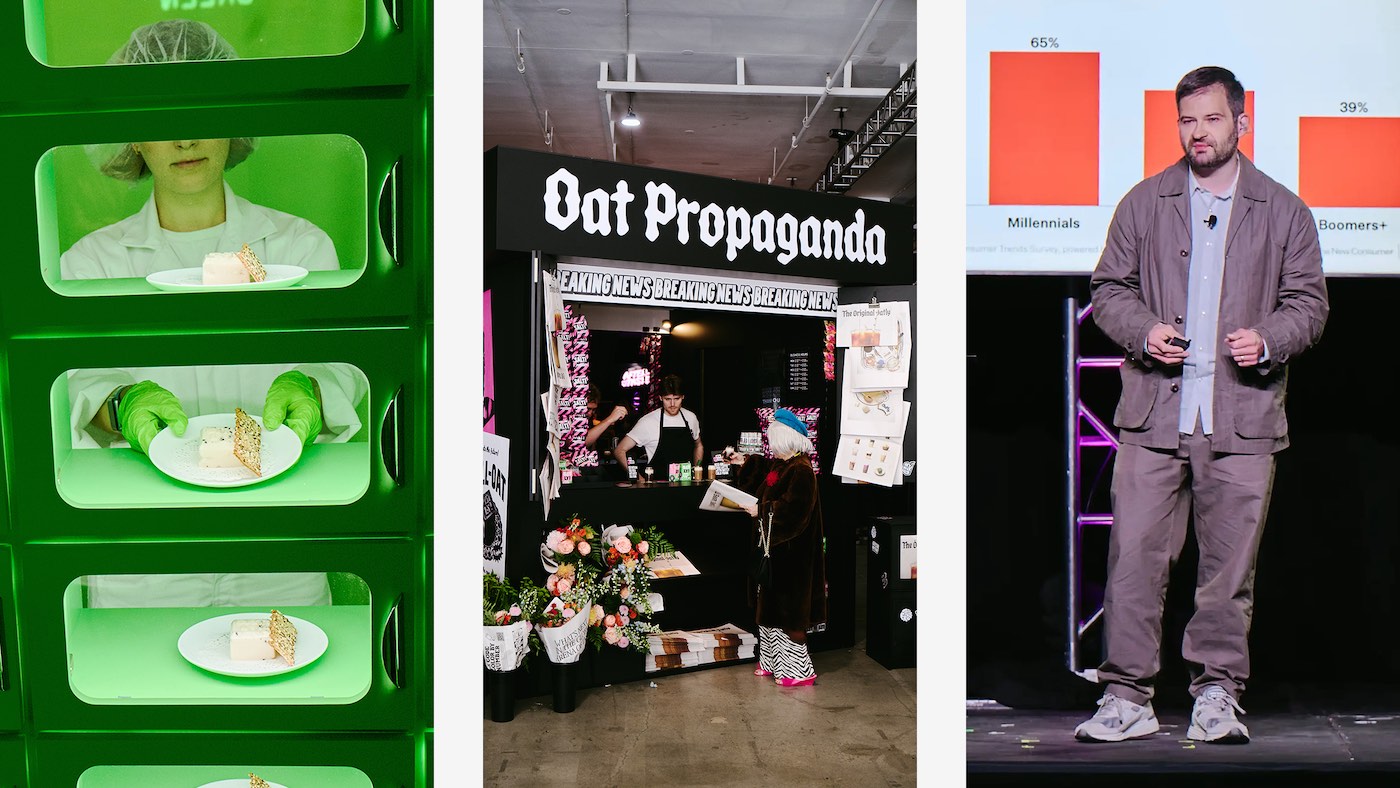
Live from Oatly Aftertaste, the “Davos of Beverage” —
Last week in New York, I presented at Oatly Aftertaste, a highly caffeinated summit on the future of drinks, complete with live band and matcha fountain.
My keynote, as you might guess, was a data-rich look at how Gen. Z and young Americans are reshaping the beverage industry. (You can download my slides here.) But it was also neat to hear from café and roastery owners about how some of those same trends show up every day in their stores.
Beverage as identity. The big picture is that while everyone has to drink every day, young consumers especially love beverages and consider them part of their image. Some 55% of Gen. Z and Millennials agreed that “My favorite beverages are part of how I express my personality” in our latest Consumer Trends Survey with Coefficient Capital — more than double Gen. X and older generations.
This is also expressed by where people get their favorite beverages, and many of the coolest new cafés are not traditional shops.
On a panel moderated by Emily Sundberg, Sydney Wayser talked about opening and running Granada, a fun and cute new coffee shop in Los Angeles’ Angelino Heights neighborhood that’s on the ground floor of her house.
“We thought, ‘well, maybe we’ll just get to know our neighbors’,” Wayser said. But instead it’s become a must-go destination that people set out to visit — “people drive from San Diego, people fly from Prague” — with its own community. “A lot of people meet in person all day, become new friends. There’s a Granada couple. We’re waiting for the engagement.”
Function is the new flavor. Gen. Z and Millennials are also driving the boom in “functional” beverages as they look for benefits other than just taste.
Energy and hydration are the mature categories here — coffee and tea are the original functional beverages — but young consumers want more from their drinks, including calming or relaxing vibes, focus and clarity, gut health, and occasional euphoria.
Protein is one of the top things consumers say they want more of, and fiber is climbing fast behind it (Google searches for “fiber foods” recently set an all-time high). And as I detailed last week, younger generations are much more interested in trying high-protein coffee, milk, and cold foam. (We’re asking about matcha next.)
The future is surely weirder. Gen. Z and Millennials have led the matcha trend and turned it into a vehicle for dessert-like treats, shared globally on social media.
How will Gen. Alpha shape the beverage world next? My take is that today’s novel “global flavors” and other experimental ideas — slippery and chewy textures — are just going to be normal. All these mixtures of culture, and the way that information travels so quickly now, is going to make it so that none of these things seem weird to the most connected generation yet. (At the event, Oatly served “everything bagel”-flavored oat jello shots and a stupidly good tortilla and agave latté with a spicy chip rim.) So crank the weirdness up even more!
One of my favorite moments from Aftertaste was when Tohm Ifergan, the founder of Dayglow — an excellent coffee shop in Chicago, LA, and Brooklyn — answered a lightning round question: “Make a prediction for a flavor that we’re about to see everywhere.” His answer: “Salt.” Now we’re talking!
There’s a new status bottled water brand in town. And in true 2026 The New Consumer fashion, I didn’t find out about Loonen at Expo West, on BevNet, or even from the Whole Foods drinks fridge.
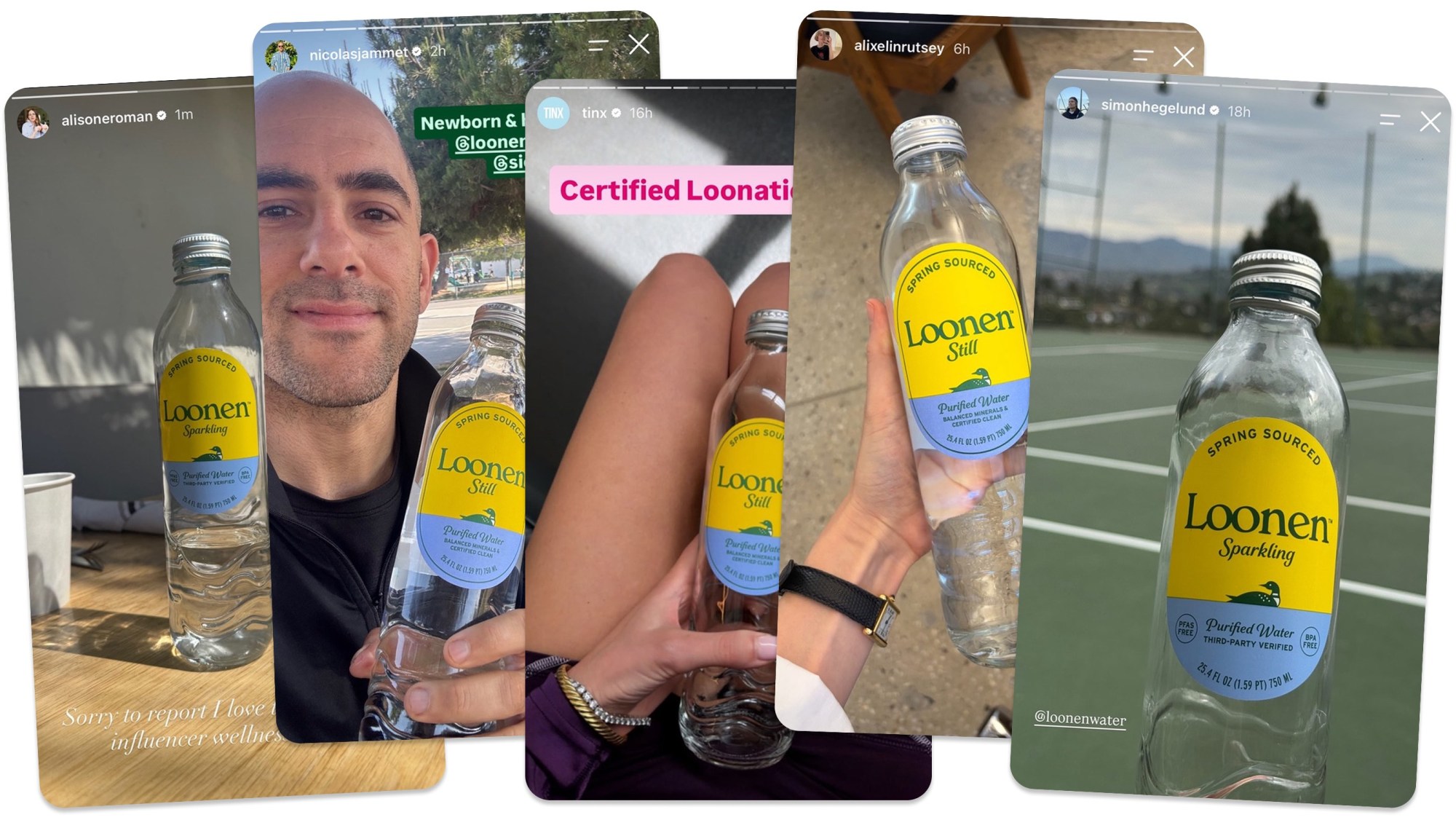
I learned about it a few months ago from Tinx, the New York-based influencer, writer, and satellite radio host, who sometimes posts a glass bottle of Loonen — with its unmistakable bright yellow label — between workout photos and relationship advice to her more than 640,000 Instagram followers.
Most consumer brands launch with an influencer playbook these days; if you’re running the venture-growth route, you basically have to.
But Loonen’s influencer heat has become more of the story than usual, especially for a company whose founder isn’t one herself. (Before starting Loonen last year, CEO Clara Sieg spent almost 15 years at Revolution, the venture firm founded by Steve Case.)
“Sorry to report I love the sparkling influencer wellness water,” Alison Roman — the cookbook author and food personality who’s helped shape Millennial eating and drinking for a decade — posted last month to her 800,000 followers. (“I almost fell off my stool,” Sieg says. “I’ve cooked an inordinate number of her recipes.”)
Loonen is, in many ways, the perfect product for this cultural moment.
It’s a nice-looking, thoughtfully designed object that’s hefty in hand, priced at a premium, and Stories well. It also genuinely tastes great.
It earnestly aims to solve a problem — our flawed and sometimes toxic water system — that shouldn’t exist.
And it satisfies both extremes of the wellness spectrum, serving bicoastal elite tastemaker types and also obsessive cleanmaxxers who would do anything to avoid microplastics or chemicals.
Loonen’s big pitch is that it’s extremely clean and is willing to prove it with regular test results — implying that other bottled water isn’t, or at least might not be.
It’s primarily addressing two problems: One is the water itself, which could be contaminated at the source with chemicals or other substances that have appeared in the US water supply system. (“Every source has a footnote,” Sieg says.)
The other is the packaging and distribution process, in which drinking water sits in plastic bottles — often at high temperatures — for months before it’s consumed, which could leach chemicals or microplastics.
Loonen currently sources its water from a spring in the Palomar Mountains outside San Diego, not from a municipal water source. (It’s open to using multiple sources in the future; unlike Evian or Fiji, there’s no terroir story here.)
But then it moves the water in stainless steel tanks to its production facility, where it filters it using stainless lines and physical membrane filtration. “Never any chemical intervention, and never any plastics,” Sieg says.
It then adds minerals back to the water, including Celtic sea salt, magnesium, potassium, and calcium.
“And then we only ever put it in glass. And that’s an imperative, because it’s the only practical material from a bottling perspective that doesn’t leach,” Sieg says.
To minimize any contamination from the FDA-required plastic seal on its cap, Loonen built a “cap car wash” on its production line, where the caps are rinsed twice and sanitized before application.
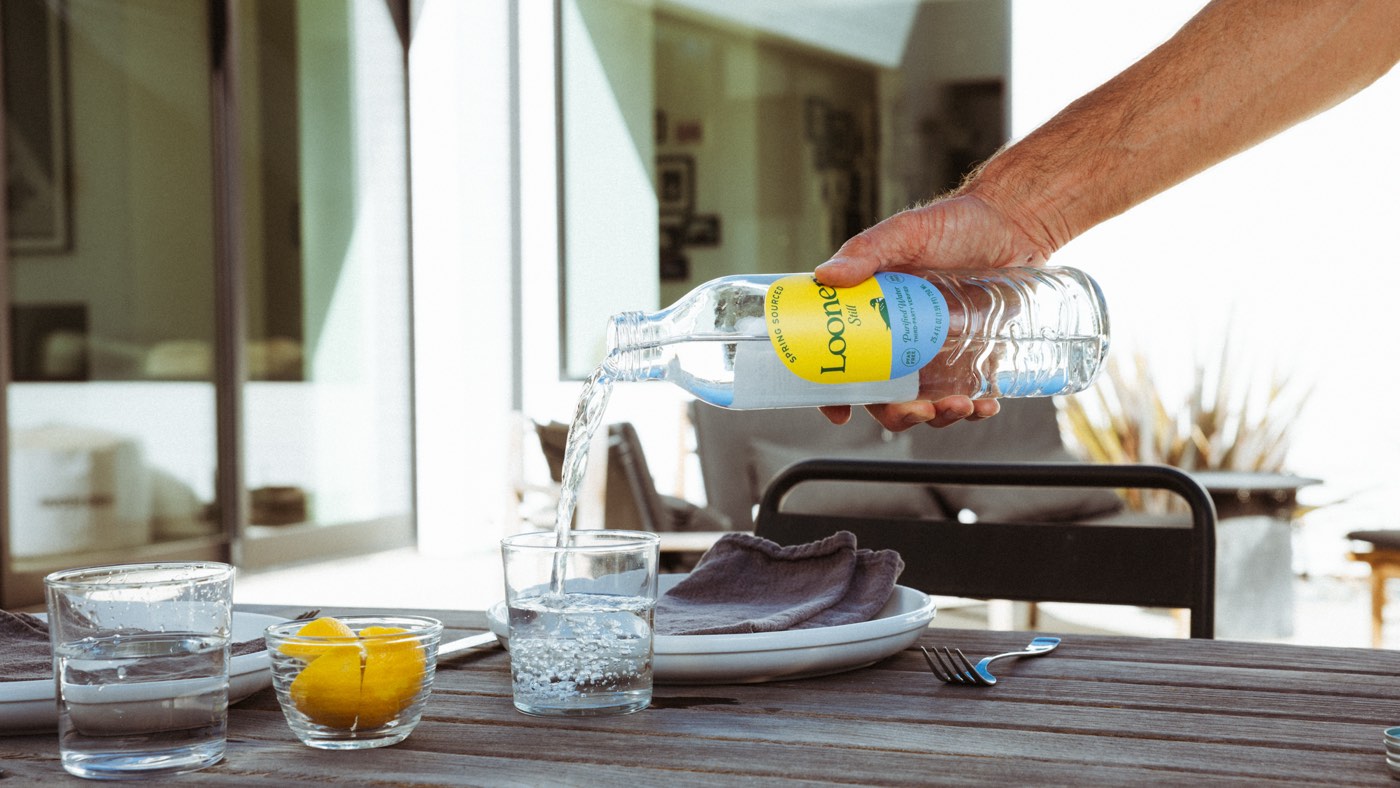
Loonen’s custom glass bottle is also a big part of the story. It, too, was thoughtfully designed, with wavy lines molded into the bottle for grip.
It’s slender enough to fit into a car’s standard cup holder, which large versions of other glass-bottled waters, such as Mountain Valley, can’t. Loonen’s bottle also has a wide mouth, both to make drinking nicer and to make it easier to slip in a sleeve of electrolytes or greens powder. “You don’t have this plume of sweet smoke coming into your face,” Sieg says.
The bottle is also noticeably heavy. “I think it’s nicely luxurious,” Sieg says, “but it’s not meant to be a super heavy bottle.” I, of course, weighed mine, and it seems heavier than it needs to be — 485g empty for the 750ml bottle, almost a third greater mass than Velleminfroy, the fancy French mineral water brand, uses for its 1-liter bottles.
Tough tossup here — the weight adds to the premium perception — à la metal credit cards — but from a unit economics perspective, you don’t want to be unnecessarily extra when you’re shipping bottles of liquid across the country.
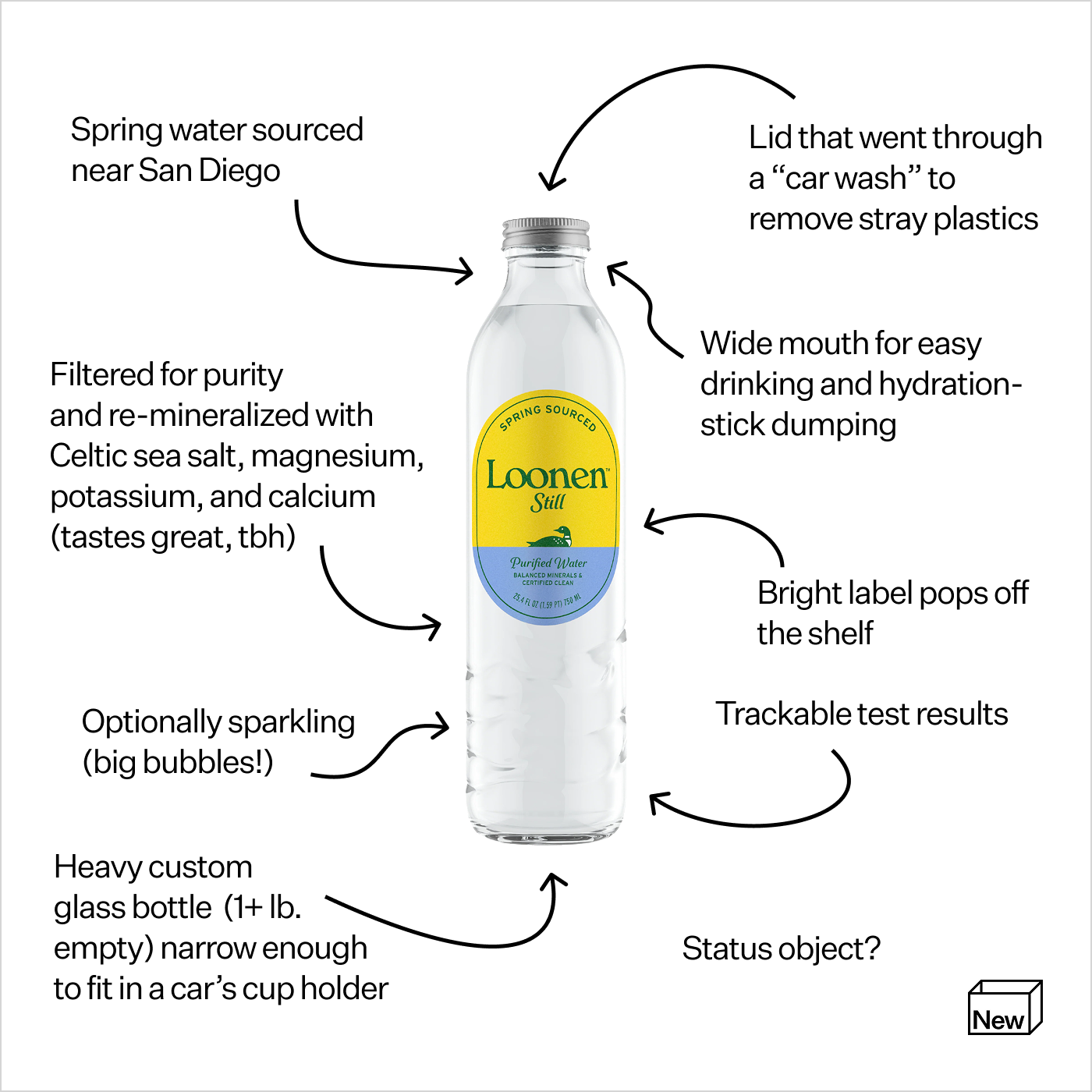
Loonen’s brand design was also done well, including a bright yellow label for the still version, with soft green and blue branding that skews a little feminine but not girly.
It’s unmissable on the shelf, and people will notice it when you’re walking around. A bottle of Loonen would look equally at home at REI as it does at Happier Grocer. The company worked with Colony, the design agency that’s also done work for Truff, the fashion brand Dôen, and for Spindrift, where Loonen co-founder David Kimmell was a longtime executive.
“When folks ask about what brands I like and think have done a really good job, I always go back to Levi’s,” Sieg says. “They are a heritage American brand that stands for quality. You can find them for $9.99 at TJ Maxx, and you can find them for $1,200 at Neiman Marcus. And when you wear a pair of Levi’s, you feel this sense of quality and happiness. That’s what we want to do in the water category.”
If all of this sounds obsessive, it totally is. And that’s the point.
Loonen started from a consumer need, Sieg says, “which was my own,” going through IVF and then pregnancy and postpartum, “learning a lot about plastics and endocrine disruptors and how bad they are for you broadly.”
The rest of this post is for paid members of The New Consumer.
Join for or .
Already a member? Sign in here.

Hi, I’m Dan Frommer and this is The New Consumer, where consumer operators, founders, and investors get the real read on what’s happening — original reporting, proprietary data, and sharp analysis you can take into your next meeting.
You’ll get my twice-weekly newsletter, read by leaders at Sweetgreen, David Protein, Forerunner, and L Catterton. Plus Consumer Trends, our research series cited by the Wall Street Journal, Axios, and WWD.
Not ready to join? Start with a free account.