
Consumer Trends
YouTube is underrated — a huge part of the future of television
Massive, organic, and differentiated, YouTube is only getting better, with a special connection to Gen. Z.
 By Dan Frommer on Friday, August 2, 2024 at 8:00 am
I noticed something recently: Turning on my TV in the evening, the first app I instinctively open is no longer Netflix, HBO, or any of the premier streaming services — more often than not, it’s now YouTube.
For a long time, YouTube didn’t come up much in conversations about the future of television — the “streaming wars” usually focus on Netflix versus Amazon and a bunch of old TV companies. That’s starting to change a little — a New York Times piece this week, major callouts in Netflix’s earnings letter last week — and it’s overdue.
YouTube has been underrated and underappreciated for years, and is in many ways the future of television and entertainment. We — Coefficient Capital and I — devoted a section of our latest Consumer Trends report to YouTube, and I’ll dive in deeper here.
First, the big picture: Americans still watch a lot of television — more than 5 hours per day, on average, according to the consultancy Activate’s latest Tech & Media Outlook presentation. Streaming has grown to represent around 40% of total TV viewing time, according to Nielsen — the rest is mostly cable and broadcast.

Among streaming services, YouTube is the biggest and most watched, commanding around 25% of total streaming time and 10% of all TV screen time in June, according to Nielsen. Netflix is a close second at 8% of total TV time. After that, it’s a sharp drop: Disney+ and Hulu, each at 3%.
YouTube is also, for many Americans young and old, their favorite.
A massive platform
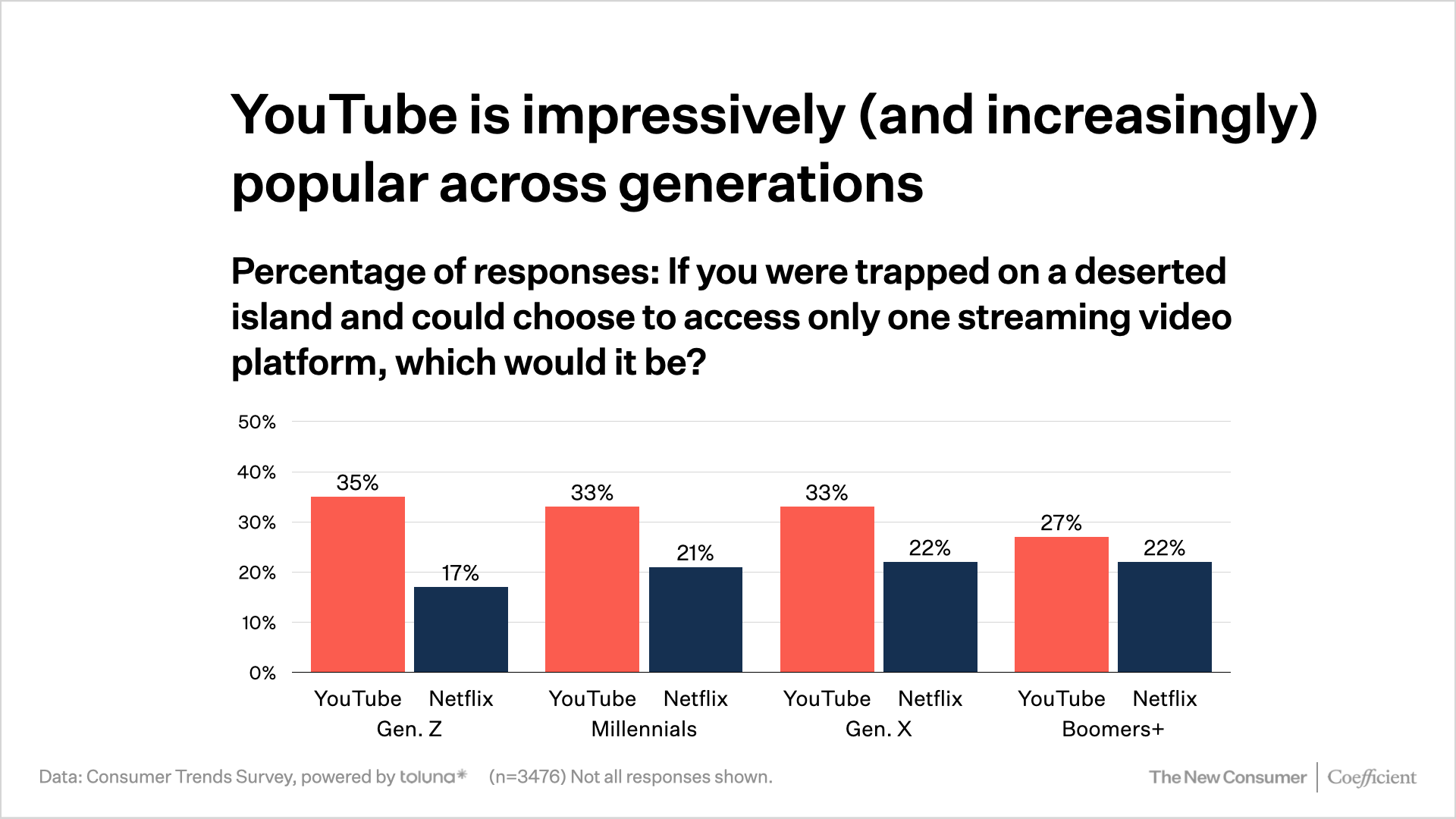
In our latest Consumer Trends Survey of nearly 3,500 US consumers, conducted in June by Toluna, we reprised one of our favorite questions, inspired by the great internet stock analyst Mark Mahaney: If you were trapped on a deserted island and could choose to access only one streaming video platform for entertainment purposes, which would it be?
Some 31% of US consumers picked YouTube, up from 27% the previous time we asked this question in late 2022. Netflix came in second place at 21%, down from 26% a couple of years ago. Amazon and Hulu both came in around 9%. As did TikTok, which was a big jump up from 5% last time.

Also impressive is YouTube’s popularity across generations.
In our survey, 35% of Gen. Z consumers said they’d pick YouTube on the deserted island, its highest percentage among generations. (This was also Netflix’s lowest-scoring generation, at 17%; TikTok actually came in above it with Gen. Z, at 19%.)
But 33% of Millennials, 33% of Gen. X, and 29% of Boomers also picked YouTube, ranking top for each age group. Since our survey in late 2022, YouTube’s popularity has increased the most among older consumers.
That said, Gen. Z — which grew up with YouTube, and the internet — has a special and different relationship to YouTube.
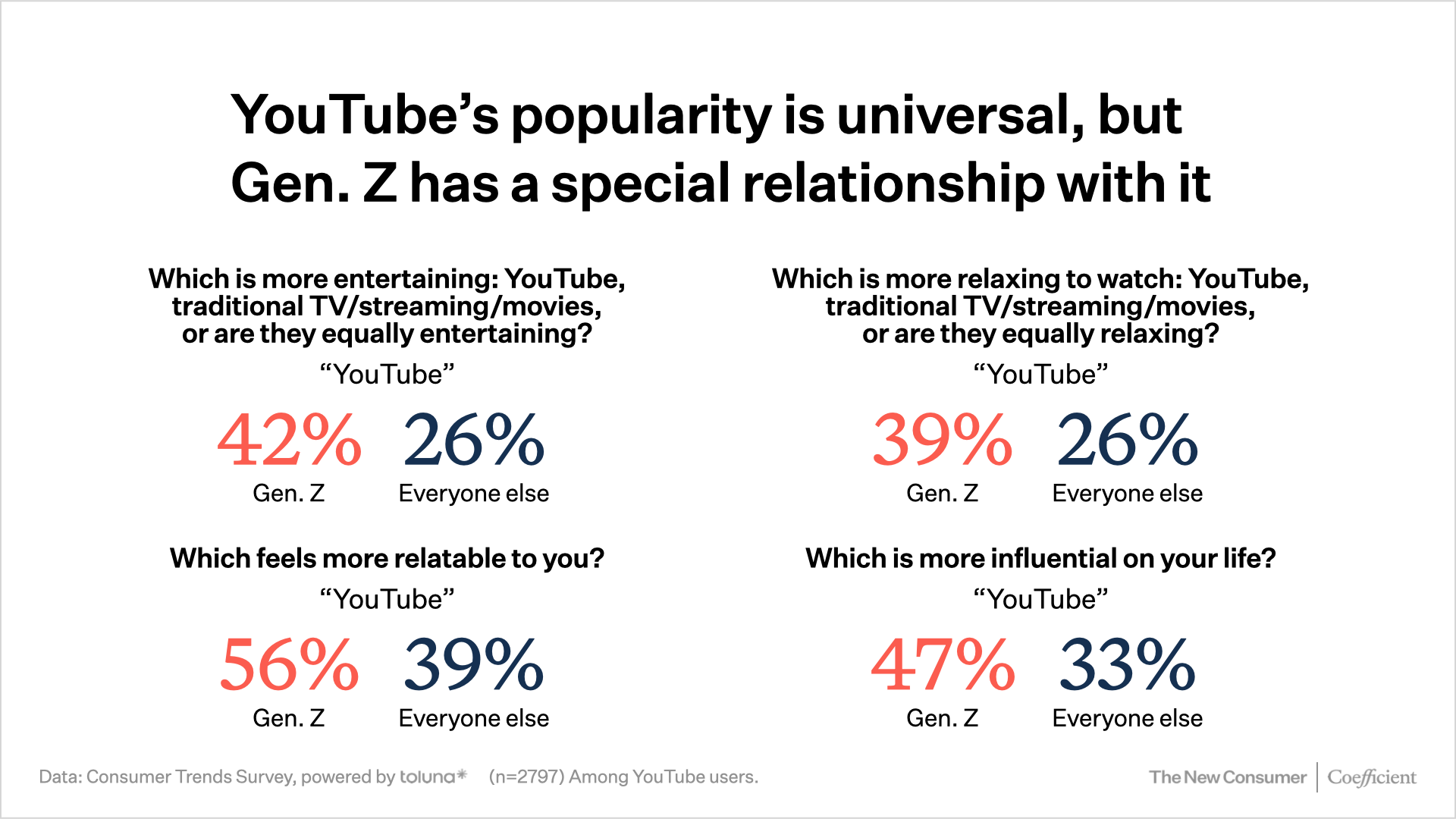
In our survey, when asked which is more relatable to them — YouTube, traditional TV/streaming/movies, or that they’re equally relatable — more than half of Gen. Z YouTube users chose YouTube; only 15% chose traditional TV/streaming/movies. Gen. Z viewers are also more likely than older generations to say YouTube is more entertaining, relaxing, and influential on their life.
YouTube users tell us they tend to watch it throughout the day, especially in the evening. But a couple of consumption occasions stand out for Gen. Z viewers: 43% say they watch it during meals, much higher than other generations. And 23% say they fall asleep to YouTube, also significantly higher than other age groups.
Highly differentiated
One thing that makes YouTube special is its unparalleled breadth and depth. There are plenty of Hollywood shows and movies there; the world’s biggest library of music videos; instructions on how to fix almost any appliance you can imagine; etc.
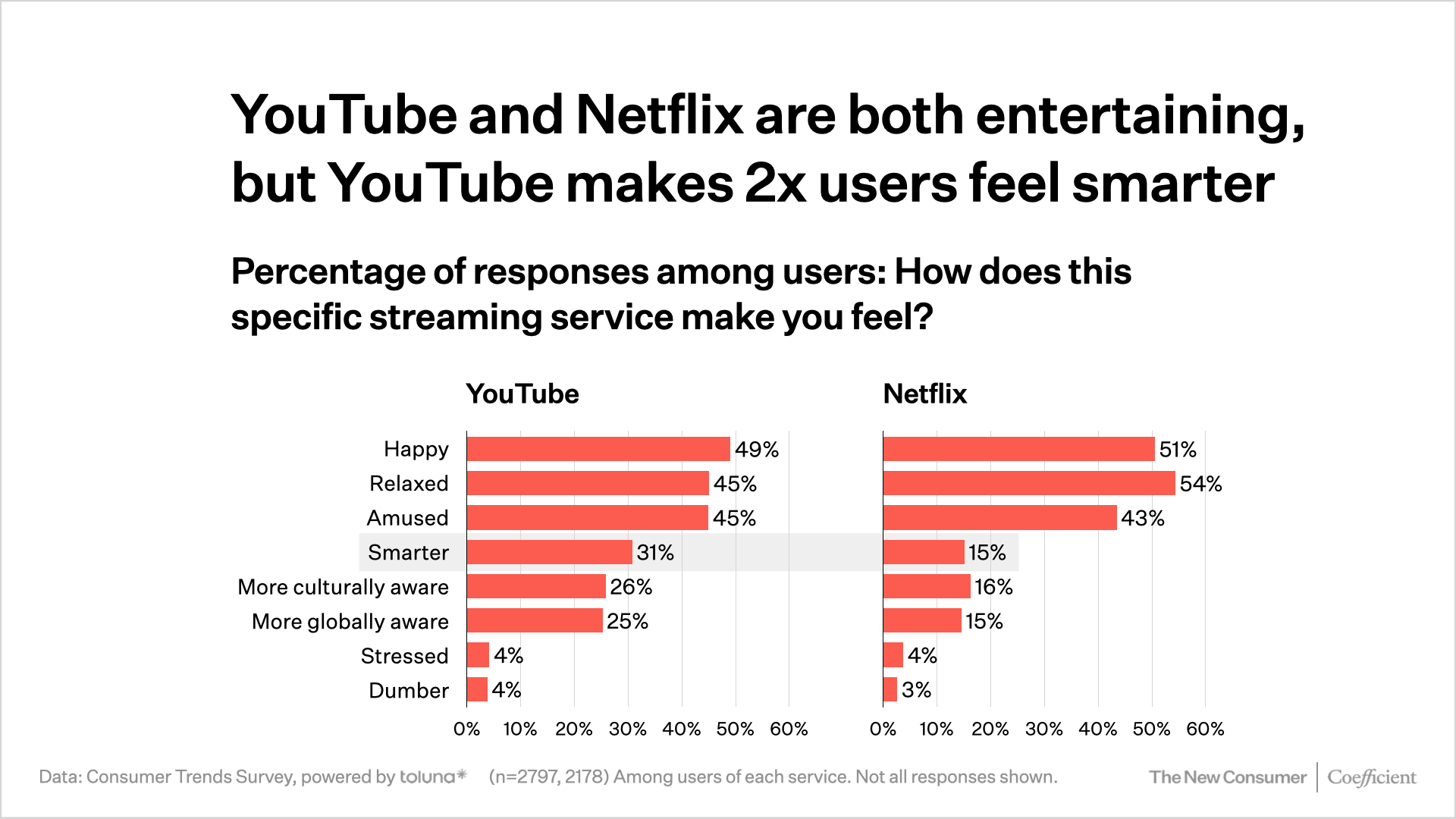
Both YouTube and Netflix make their users feel happy, relaxed, and amused. In our survey, more than half of YouTube users say they watch music videos, 40% watch movies, and 37% watch comedy videos. But twice as many YouTube users — 31% — say the service makes them feel smarter than Netflix users say about Netflix.
What makes YouTube unique is that there are now two decades of evolution in its platform-specific content: Videos that could really only appear on YouTube — and largely wouldn’t be considered on services like HBO, Netflix, or Amazon — because they don’t fit the traditional TV mold.
These include YouTube-native instructional and commentary shows, across topics from cooking and fashion to careers and politics; vlogs showing some person’s supposed everyday life in cities around the world; long ambient videos, like train journeys and walking tours; people playing videogames; and so on. The beauty is that these channels can cover extremely niche topics and still find a real audience.
In my household, what got us started as big YouTube viewers was when some of our favorite recipe developers — Alison Roman, Molly Baz, Carla Lalli Music, and Kenji Lopez-Alt — started posting cooking shows regularly during the pandemic. We’d watch these to wind down after finishing whatever “real” shows we were watching; they’re so much more real and personal (and interesting) than anything you’d see on the Food Network today.
Then I found more: A guy in Tokyo who posted videos of his day-to-day routines, shopping hauls, and apartment DIY projects. A couple in Tokyo that posts videos of their day-to-day routines, trips around Japan, and apartment DIY projects. Marques Brownlee, who makes more in-depth, high-production-quality videos about tech, cars, and gadgets than any television network would dare. A guy in London who posts very nerdy videos about the Tube transit system. A different guy in London who posts very nerdy videos about fashion and style. A channel called ParisianVibe — enough said.
And, crucially for creators and brands, these videos generate action and discovery among their viewers.
In our survey, just over half of YouTube users said they’ve prepared a new food or beverage recipe because of a video. Some 35% of YouTube users — and nearly half of Gen. Z YouTube users — have purchased a specific thing because of a video.
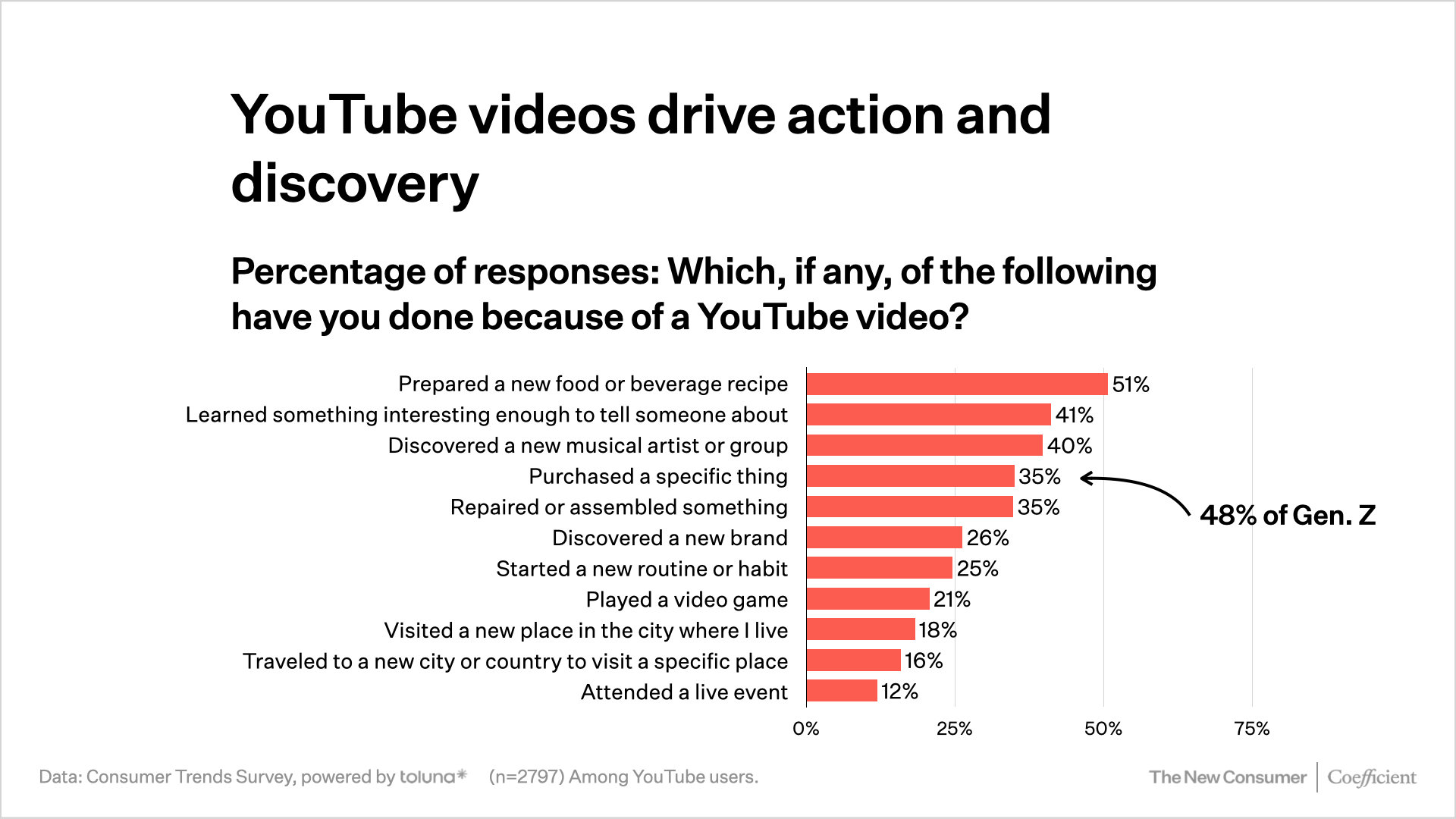
And 16% say they’ve traveled to a new city or country to visit a specific place because of a YouTube video. That includes me: Last year, I took a bullet train to visit the art-focused boutique Shiroiya Hotel in Maebashi, Japan — staying in a wood-paneled cube room designed by Jasper Morrison — in large part because that Tokyo-based couple, Hige and Me, visited for a video.
If network and cable TV have become the monoculture, dominated by NFL football games and lowest-common-denominator shows, YouTube thrives as the longform video platform for the interest graph. You might like none of my channels, but there are likely many on YouTube that you’d love.
That’s not to say I don’t watch more traditional network and streaming shows anymore — of course I do, across a variety of services. The shows that have made the most profound impact on me over the past few years — Le Bureau, Station Eleven, Succession, Industry — are as cliché “prestige TV” as it gets.
But I feel no desire to stick with a high-budget show that isn’t great anymore — there’s always something interesting on YouTube, with lower stakes. And these days, I feel zero desire to hunt through the Netflix or Hulu catalog for something to watch. If there isn’t something we’re sitting down to watch on purpose, the YouTube app now tends to get the first call.
Local talent
Thanks to YouTube’s scale and recommendation feed, creators can build meaningful audiences — people with specific interests or similar aesthetics, around the world — and generate real streams of income. (YouTube, which shares advertising and subscription sales with its publishers, generated almost $34 billion in advertising revenue for its parent company, Google, over the four-quarter period ending this June, up 15% from the prior four quarters.)
More than 550,000 YouTube channels have at least 100,000 subscribers, according to Social Blade, which tracks the industry. Around 60,000 channels have at least 1 million subscribers.
But only one channel has 300 million subscribers: MrBeast, aka Jimmy Donaldson, a 26-year-old who lives in North Carolina.
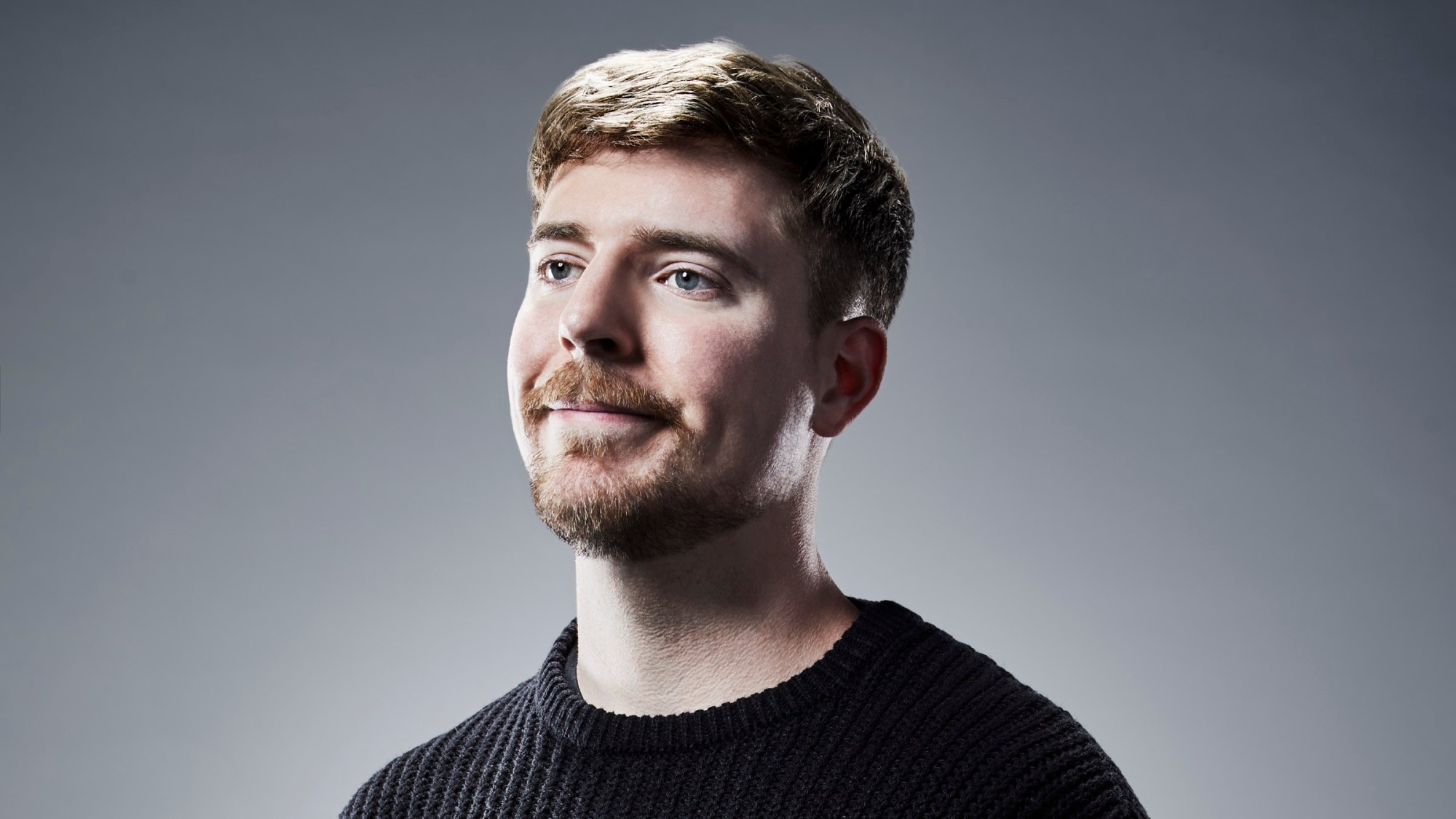
Donaldson’s wildly ambitious videos — where he often gives away large amounts of money, or orchestrates elaborate pranks — have been viewed more than 55 billion times. And he’s become the epitome of a modern multi-hyphenate creator: His Feastables snack line is a big seller at Walmart; a few years ago, he started MrBeast Burger, an audaciously large chain of “virtual” burger restaurants that’s now operating on multiple continents.
MrBeast generated $223 million in revenue last year, with $700 million projected for this year, according to an unsealed court document. (Like a true mogul, he’s in court against his business partner, the company that operates MrBeast Burger, for allegedly doing a sloppy job and hurting his reputation.)
And to young Americans, he’s about as big a celebrity — and “show” — as it gets.
In our survey this June, 77% of Gen. Z YouTube users said they’re aware of MrBeast, up from 63% in our survey last November. That’s more than the percentage aware of the hit Netflix show Stranger Things (73%); the Netflix game show satire Squid Game, which inspired MrBeast’s most-viewed video (66%); the 90s hit NBC sitcom Seinfeld (46%); and the show that many of their parents are probably watching, Yellowstone (40%).

And when you grow up paying attention primarily to YouTube (or TikTok, or Instagram) creators, as today’s young people have, they’re as big as they get.
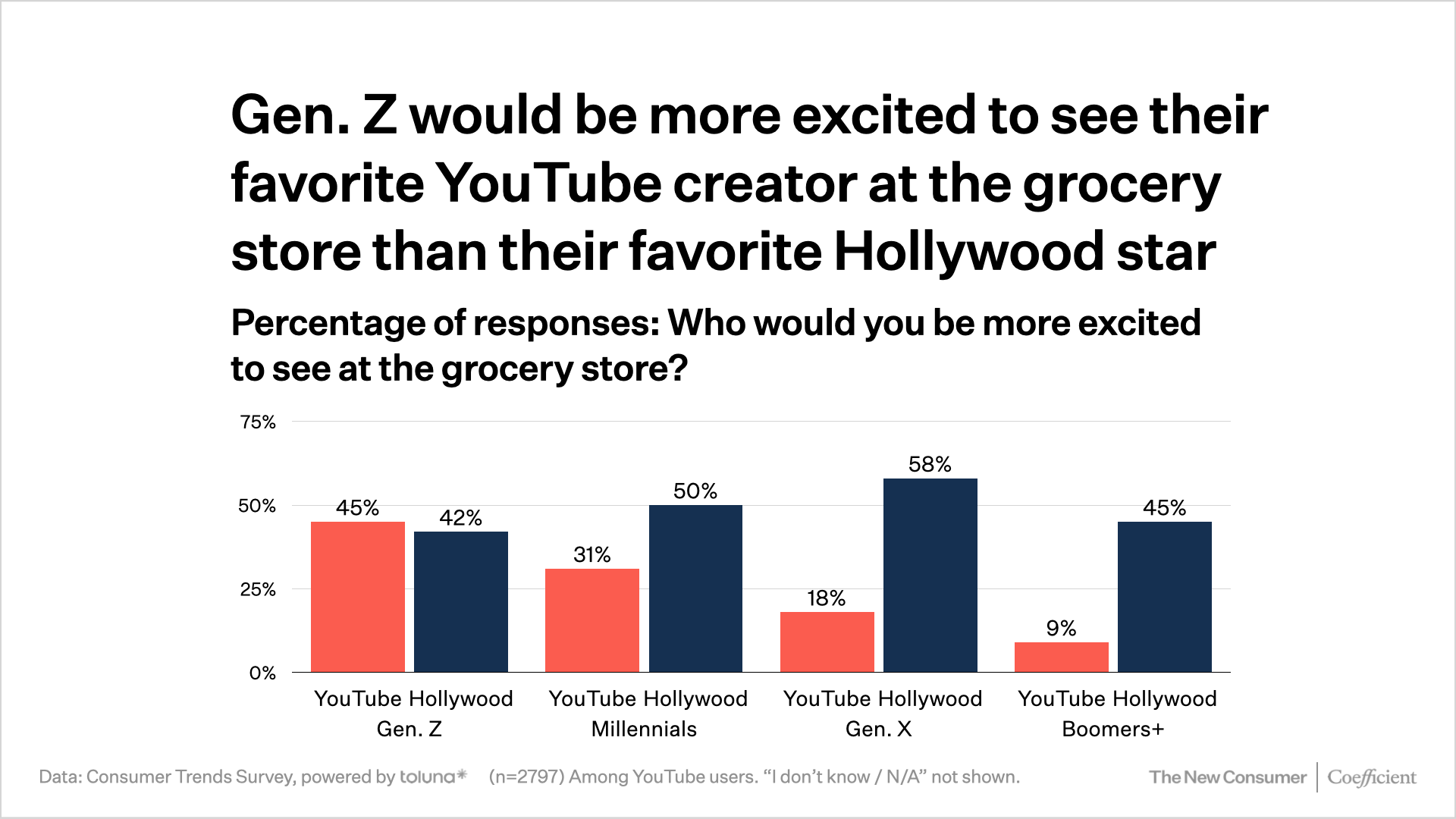
Would you rather run into your favorite YouTube creator or favorite Hollywood star at the grocery store? In our survey, more Gen. Z YouTube users said they’d rather run into their favorite YouTuber — the only generation to say this.
It’s understandable, then, that this would seem an attractive life or career path.
In a previous Consumer Trends Survey, more than a third — 37% — of Gen. Z and Millennial Americans said they considered themselves a “digital creator.”
In our most recent, we asked US YouTube users about their interest in creating videos for a living. Given the choice, 36% of Gen. Z and Millennials said they’d choose to be a full-time YouTube creator as a job or career. Another third said they’d choose to be a part-time YouTube creator in addition to having another job or career. Only around a quarter of Gen. Z and Millennials selected “not create YouTube videos.”
Another takeaway is that YouTube is a worthwhile platform for brands to experiment and invest in, either as a place to publish content — entertainment or educational — or to advertise.
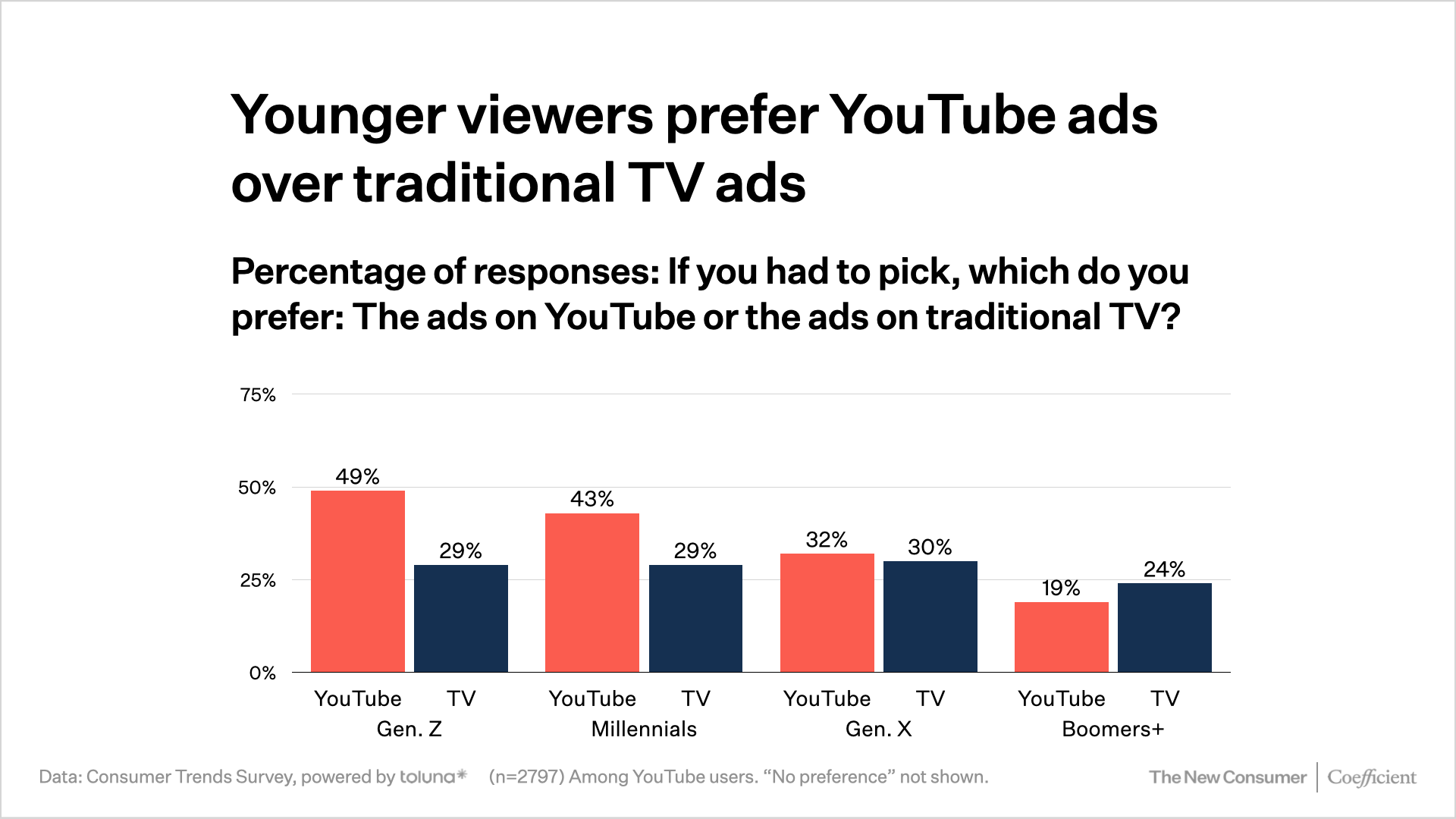
Most YouTube users say they don’t like the ads there, and that there’s too many. But if YouTube users had to pick, more choose the ads on YouTube over the ads on traditional TV or streaming — especially among younger consumers.
Gaining relevance
Back to my bigger point here, about YouTube as the future of entertainment: What makes the rise of Jimmy Donaldson — and Marques Brownlee, and most other YouTube creators — remarkable is that it’s about as organic and democratic as the media industry and (scare quotes) attention industrial complex gets.
Sure, the YouTube Inc. algorithm had a lot to do with growing their distribution and fame. But no gatekeeping studio exec had to anoint them, greenlight their ideas, or got to provide notes.
This is a significant moat for YouTube, which has no close competitor, other than perhaps TikTok (but that’s still very different). Sure, the very biggest YouTube stars can get TV or streaming deals, and may someday be a flight risk; MrBeast signed one with Amazon earlier this year.
But most of the formats, topics, speech patterns, talent, and overall vibes of YouTube don’t seem like they’d feel appropriate or welcome on services like Netflix or Max, at least not soon.
If these trends continue — platform-native content, mostly platform-exclusive talent, that’s especially popular with young consumers — then YouTube should continue taking share, representing a greater portion of the future of entertainment, culture, and attention.
Full slide deck: Consumer Trends 2024: Mid-Year Report (includes a downloadable and shareable PDF)
Hi, I’m Dan Frommer and this is The New Consumer, a publication about how and why people spend their time and money.
I’m a longtime tech and business journalist, and I’m excited to focus my attention on how technology continues to profoundly change how things are created, experienced, bought, and sold. The New Consumer is supported primarily by your membership — join now to receive my reporting, analysis, and commentary directly in your inbox, via my member-exclusive Executive Briefing. Thanks in advance.